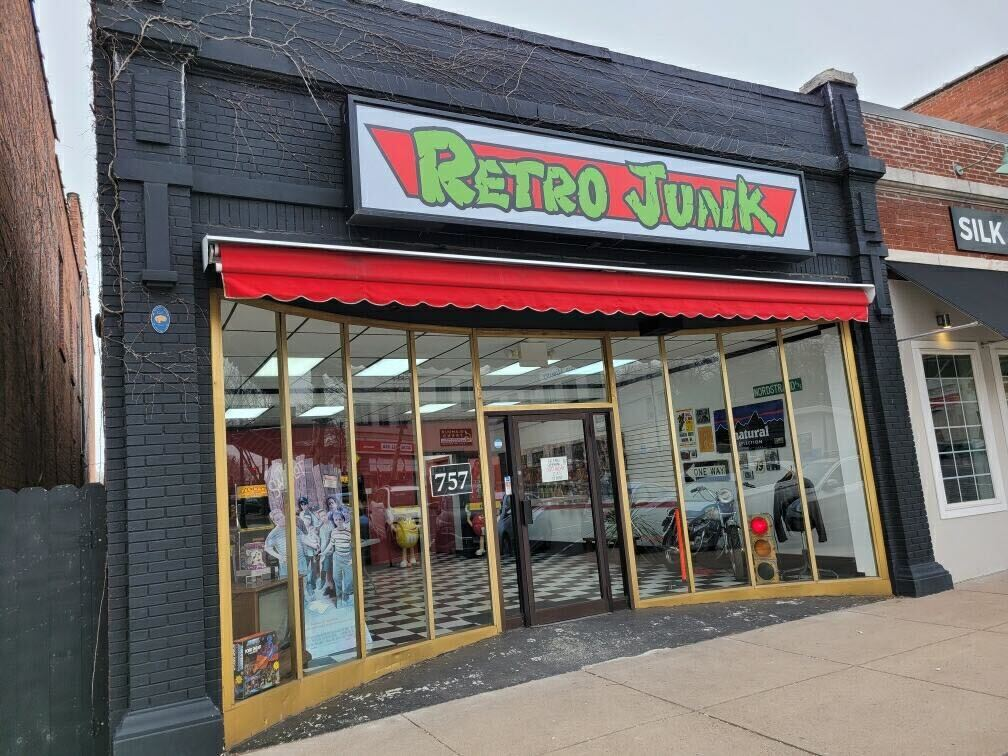
When I first looked at Retro Junk, a collectibles and retro gaming store based in Manchester, CT, I immediately saw its potential. The store already has a strong identity rooted in nostalgia and gaming culture, but its branding doesn’t fully capture how fun, inclusive, and engaging the experience actually is. From the outside, I actually never knew it was a collectibles store! Let’s go through how I fully redesigned their brand!
Rationale
Right now, Retro Junk’s brand feels a little disconnected. While the store itself is welcoming, fun, and immersive, its visual identity comes across as outdated and easy to overlook, especially online. There’s also a gap in communication: people don’t always realize they can actually hang out, play games, and explore!
My redesign focuses on modernizing without losing nostalgia. I wanted to highlight what already makes Retro Junk special: its inclusivity, fun personality, and retro charm, while making it more visually engaging and easier to recognize.
Research
The target audience for Retro Junk is primarily young adults (16–30), along with nostalgic gamers and collectors of any age. This audience tends to prefer bold, visually engaging designs, like neon colors, pixel-inspired graphics, and clean but playful typography.
Looking at popular competitors like Retro Games Plus and Stateline Video Games, I noticed three main approaches:
- Some use minimal, clean branding, which feels clear, but also a bit dated.
- Others go for graffiti-style or chaotic fonts, which can feel expressive but inconsistent.
- A few brands lean into bright, fun visuals, but lack structure.
With all of this in mind, this gave me an opportunity: create a brand that’s fun and cohesive!
New Brand Proposal
The name Retrojunk stays – it’s memorable and fits perfectly. I introduced the slogan:
“Retro Finds, Endless Memories.”
The brand voice is friendly, informal, and inclusive, like talking to a friend. It emphasizes that everyone is welcome, no matter their level of gaming knowledge.
The brand story focuses on creating a space where people can relive their childhood, discover new treasures, and just enjoy being there.
Visual Brand
This is where things really started coming to life!
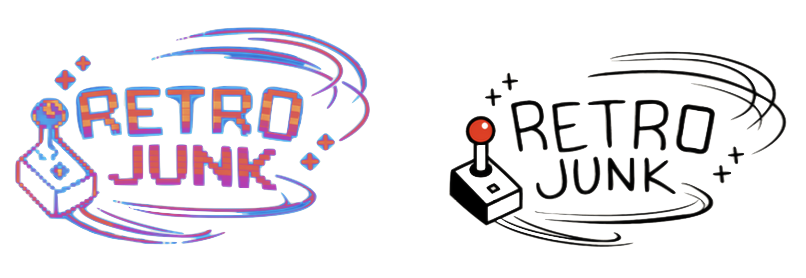
I created two logos to use consistently for the brand:
- A bold, neon, nostalgic version to grab attention.
- A cleaner, more minimal version for professional use.
The color palette mixes dark bases with vibrant accents like neon pink, teal, and yellow, capturing the retro arcade energy.
Typography leans into pixelated, 8-bit-inspired fonts for headings, paired with simpler fonts for readability.
Brand In Action
I designed a full identity system to make the brand feel immersive everywhere:
- GameBoy-inspired business cards that double as collectibles.
- Retro-style receipts with phrases like “Continue?” and “Final Score” to show the total!
- Rarity tags (Common, Rare, Epic, Legendary) to gamify shopping
For marketing:
- Posters and brochures use the same bold visuals and tone.
- The website comps focus on being clean, interactive, and easy to navigate while still feeling fun.
- A newsletter helps build community and keep customers engaged beyond the store!
Final Thoughts
This redesign isn’t about changing Retro Junk, but about amplifying it! By combining its nostalgic design with modern clarity, the brand becomes more engaging, more accessible, and more competitive.
Because at the end of the day, Retrojunk isn’t just selling products, it’s selling memories. And now, the brand finally shows that!!
From looking at my redesign, I hope you can learn and also help a small business in need of a rebrand! Thanks for reading!
View a full deck of my rebrand below!