Have you ever walked into a room and instantly felt calm? Or clicked on a website and felt energized before reading a single word? That’s color psychology at work – the invisible force shaping how we feel before we even think about it.
Color psychology is essentially the study of how colors influence perception, mood, and even behavior – whether we’re aware of it or not. Colors affect our emotions, our decisions, and our sense of trust and energy in ways that are deeply rooted in both culture and human biology.
At its core, color psychology blends psychology with design: it’s not just about pretty hues but about meaning. In marketing, designers choose colors intentionally to influence how people feel about a brand or product. For example, a brand might use blue to evoke security and trust, or red to create excitement and urgency. It completely depends on the emotions that the brands want their consumers to feel!
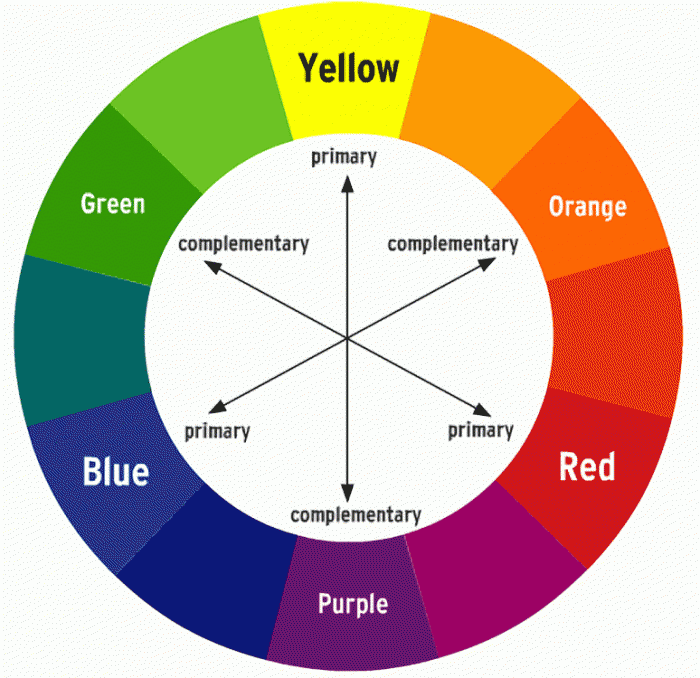
But before you can use colors with intention, it helps to understand color theory itself. At the heart of color theory is the color wheel, a simple visual tool that maps how hues relate to one another. Imagine the wheel as a rainbow circle where primary colors like red, blue, and yellow sit as the foundational building blocks. From there, mixing these creates complementary colors like green and orange, and then tertiary hues that bridge those gaps.
Color theory is about relationships: how colors contrast, complement, or harmonize with one another. Complementary colors (those opposite on the wheel) can make a design pop, while analogous colors (those next to each other) feel harmonious and soothing (Decker, 2023). Learning these relationships lets designers craft palettes that tell a story — visually and emotionally.
Once you understand the wheel, you can start interpreting color meaning. While these interpretations aren’t set in stone, general psychological associations do exist, and are widely used in UX, branding, and marketing. For instance:
Red often signals energy, urgency, or passion, and grabs attention quickly.
Blue tends to be calming and trustworthy, which is why we see it so often in technology and health companies.
Green conjures nature, growth, and stability – think health, refreshment, and wellness contexts.
Yellow radiates warmth and happiness but can lead to negative emotions like anxiety and uneasiness.
These associations come from cultural conditioning, shared symbolism, and the way our brains interpret visual information. Color can even bias decision‑making: people make first impressions about products based on color alone, long before text or layout comes into play.
Of course, color psychology isn’t totally universal — individual and cultural differences matter. What feels peaceful in one context might feel cold or distant in another. That’s why good designers learn not just theory, but empathy: testing, experiencing, and refining based on how everyone reacts.
So next time you choose a palette — whether for a room, a brand, or a poster — it may be fun to ask: What am I trying to communicate? Because behind the aesthetics lies a powerful psychological tool that can shape feeling, focus, and emotional connection — all through the simple brilliance of color.
When was the last time you picked up a fashion magazine?
Not scrolled past a runway clip, or liked an outfit on Instagram. Not saved a trend on TikTok.
I mean actually sat down, flipped through the pages, and spent time with it.
If you’re anything like me—or honestly, like most people today—it’s probably been a while. Which is something I have become extremely interested in pertaining to the fashion industry. Over time, I have created essays and white papers (PDF linked below) about this topic; the rapid decline of today’s print media.
When fashion magazines first became popular, they weren’t just a source of inspiration—they were the way people experienced fashion. Publications like Vogue (founded in 1892) or Harper’s Bazaar (1867) shaped trends, introduced designers, and told stories through carefully curated pages.
But today, fashion mostly lives online.
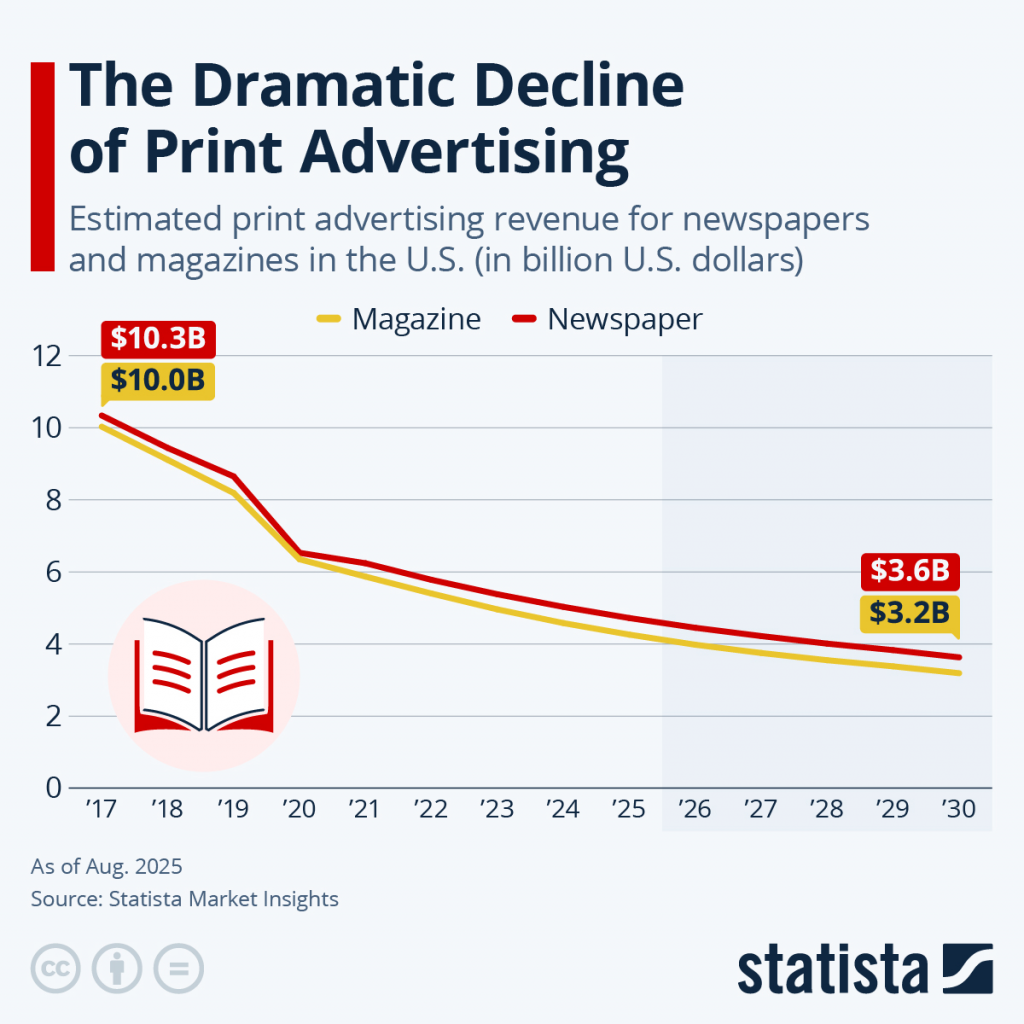
According to research by Gitnux, nearly half of U.S. adults already consume magazines digitally, and print revenue is expected to keep declining over the next few years. We’ve also seen major shifts—magazines reducing issues, or even going fully digital (cough… Teen Vogue).
A graph on Statista showing the predicted decline of print advertising. Without advertising, how are print magazines supposed to stay alive?!
At first glance, that makes sense. Digital is faster, cheaper, and more accessible.
So what is the true problem here?
The problem isn’t just digital media—it’s how we interact with it.
In my white paper, I focused a lot on the idea of attention. Specifically, how social media has completely reshaped our ability to focus on anything for a long period of time.
Think about it: the average person spends hours a day on their phone, constantly switching between apps, videos, and posts. Fashion content—especially on platforms like TikTok or Instagram—is often consumed and scrolled past in seconds. Designers can spend months creating a collection… only for someone to watch a clip of it for three seconds before scrolling. This creates an entirely different relationship with fashion.
What really stood out to me in my research is how this affects not just magazines, but the meaning of fashion itself. In the past, fashion used to feel more like storytelling; something you studied, interpreted, and appreciated over time. Now, it often feels more disposable. Trends come and go faster than ever, largely driven by algorithms and viral moments.
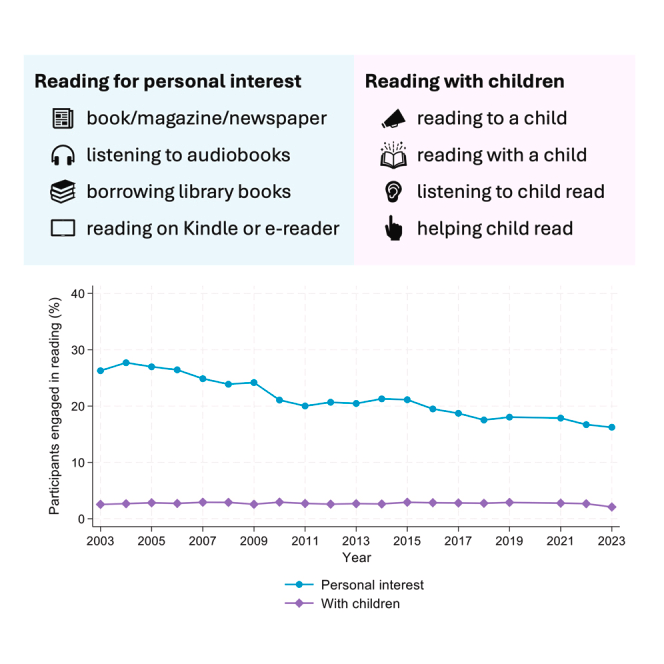
There’s also been a noticeable decline in reading overall over the past 20 years. Fewer people are engaging with long-form content, which was once the backbone of fashion media. And when we lose that, we lose context – why something matters, who created it, and what it represents.
Graph by the National Library of Medicine showing the percentage of reading for pleasure among adults from 2003 to 2023, showing a rapid decline of about three percent per year.
Even within the industry, this massive shift is causing burnout. Faster trend cycles mean more pressure, less time to create, and less room for meaningful work. This, in time, has resulted in the decline of fashion-related careers as well, declining 30% since 2014 according to New York news outlet The City.
In high hopes, I don’t think print media is disappearing completely. I think it’s becoming something else. Almost like a luxury. A moment to slow down in a culture that’s constantly speeding up.
In my research, I talked about concepts like focus, flow, and deep work explained by Johann Hari – basically, the idea that meaningful creativity requires time and attention. And maybe that’s exactly what print still offers: it forces you to pause and sit with fashion instead of just skimming past it.
So maybe the question isn’t “Is print fashion dying?”
Maybe it’s: Do we still know how to engage with fashion in a deeper way?
Because at the end of the day, fashion hasn’t lost its meaning—we’ve just changed how we experience it.
Bone, J. K., Bu, F., Sonke, J. K., & Fancourt, D. (2025). The decline in reading for pleasure over 20 years of the American Time Use Survey. IScience, 113288–113288. https://doi.org/10.1016/j.isci.2025.113288
David, G. (2024, September 4). New York’s Fashion Industry Is in Dangerous Decline, New Study Warns. THE CITY – NYC News. https://www.thecity.nyc/2024/09/04/new-york-fashion-week-industry-decline-partnership/
Fleck, A. (2025, November 26). The Dramatic Decline of Print Advertising. Statista Daily Data; Statista. https://www.statista.com/chart/35520/estimated-print-advertising-revenue-in-the-us/?srsltid=AfmBOoqJ8Gsfd5knhRaiO4EeKI4qde7bL-iHj-QhD4Lwi8sREMa96x0H
Sharma, P. (2026, February 13). Magazine Industry Statistics (E. Santos, Ed.). Gitnux.org. https://gitnux.org/magazine-industry-statistics/
You’ve probably done it before—liked a post about an issue, maybe shared it to your story, and then kept scrolling like nothing happened.
Same.
It kind of makes you wonder… does social media activism actually work, or are we all just participating in something that feels important but doesn’t really go anywhere?
After learning more about it, I realized the answer isn’t that simple.
In a nutshell, social media activism is basically how people use platforms to raise awareness, organize, and push for change. But what makes it different from older forms of activism is how connected everything is. Social media creates these huge networks where information can spread instantly, connecting people across different places, backgrounds, and experiences to one social issue.
Unlike the past, movements can go viral overnight – no need to wait for the next news segment or newspaper to come out.
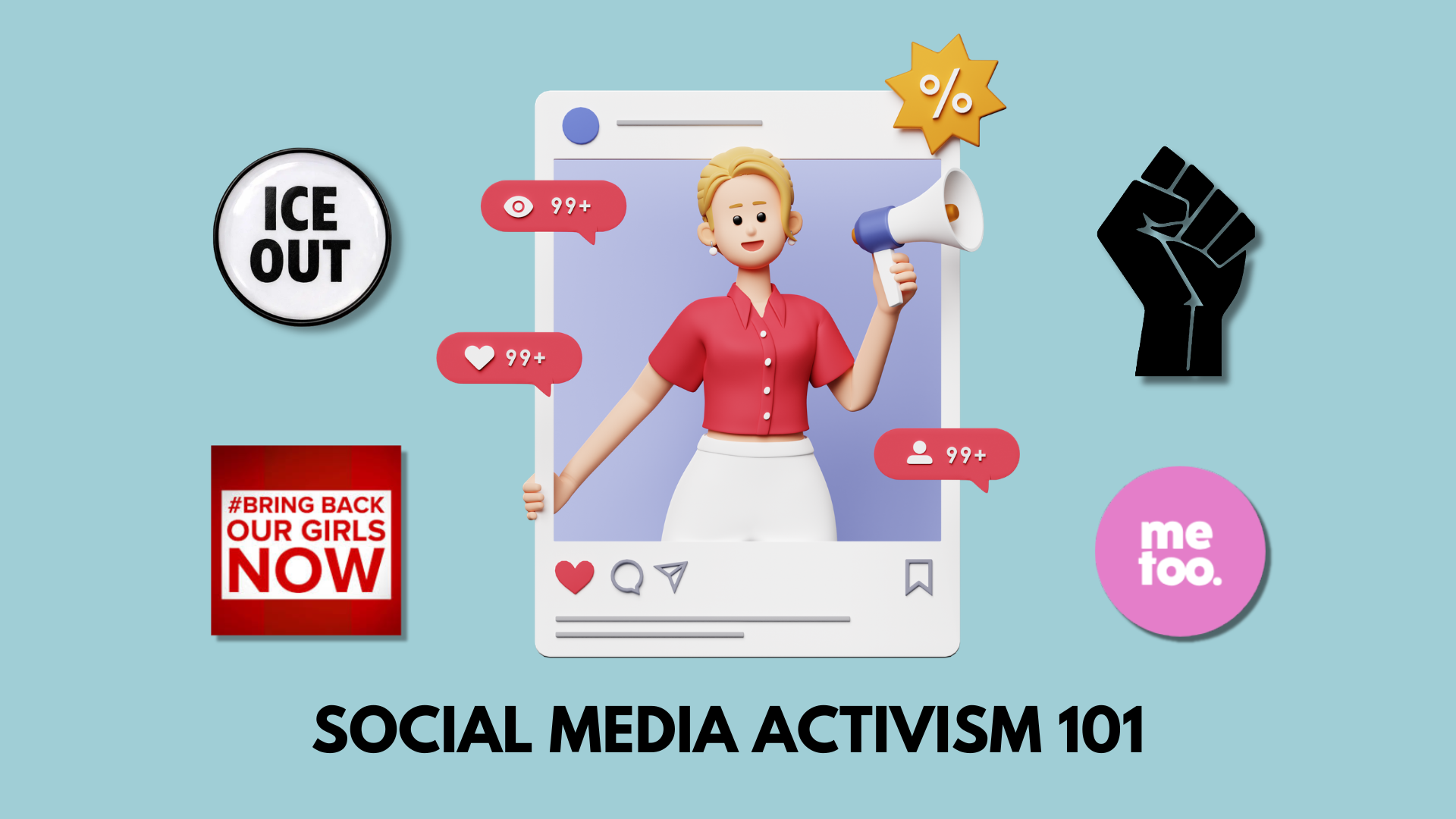
But what really surprises me is that social media isn’t just about posting. It actually plays multiple roles behind the scenes. It helps people organize events, recruit others, share ideas, and even coordinate real-world action. Think of #MeToo, or #BlackLivesMatter, and their turnouts in terms of protests and real-world activism. In other words, what happens online doesn’t always stay only online.
The #MeToo Movement allowed survivors to tell their stories of sexual harassment and abuse. The hashtag #MeToo was used by 2.3 million X users in 85 different countries in 2015, which allowed for many protests to occur around the world.
At the same time, there’s still a lot of debate about whether this kind of activism is “enough.” You’ve probably heard the term slacktivism—the idea that liking or sharing something is a weak form of activism. And honestly, that can be true sometimes. Clicking a button is easy, and it doesn’t always lead to deeper understanding or real change.
But that’s not the whole story.
Even small actions online can help spread awareness, and awareness is often the first step toward change. Social media also gives people a voice who might not have had one before. It allows individuals to share their experiences, build communities, and challenge dominant narratives without needing traditional media.
Still, there are limits. Not everyone sees the same content, and sometimes messages get lost in the noise. Social media can also create its own hierarchies, where certain voices get more attention than others. So while social media feels open and free, it’s not always equal to everyone.
I think the biggest takeaway for me is that social media activism isn’t meaningless—but it’s also not enough on its own.
It’s a tool. And its impact depends on how we use it. So the question isn’t if posting matters, but instead what we do after we post.
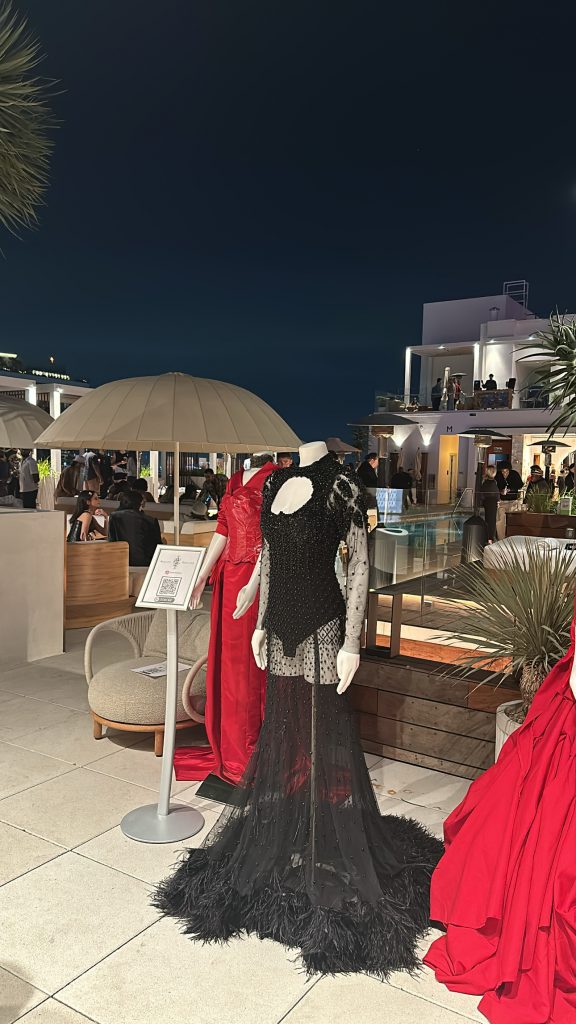
Breaking into the fashion industry can feel intimidating, especially when it seems like everyone already has connections, experience, or a clear path forward. Two years ago, I felt the same way. I was passionate about fashion, constantly inspired by what I saw online, but unsure how to actually step into the industry. That started to change when I landed an internship in late 2024 with Maison Privée, a fashion PR showroom based in West Hollywood, California. That experience gave me a behind-the-scenes look at how the industry really works—and more importantly, what it takes to get started.
Before my internship, my interest in fashion was heavily shaped by social media. Platforms like TikTok and Instagram made trends feel immediate and accessible, and they introduced me to stylists, editors, and creators who made the industry seem both aspirational and within reach. Social media didn’t just inspire me—it made me curious about the work behind the visuals. Who was pulling the clothes? Who was organizing the shoots? Who was making these moments happen?
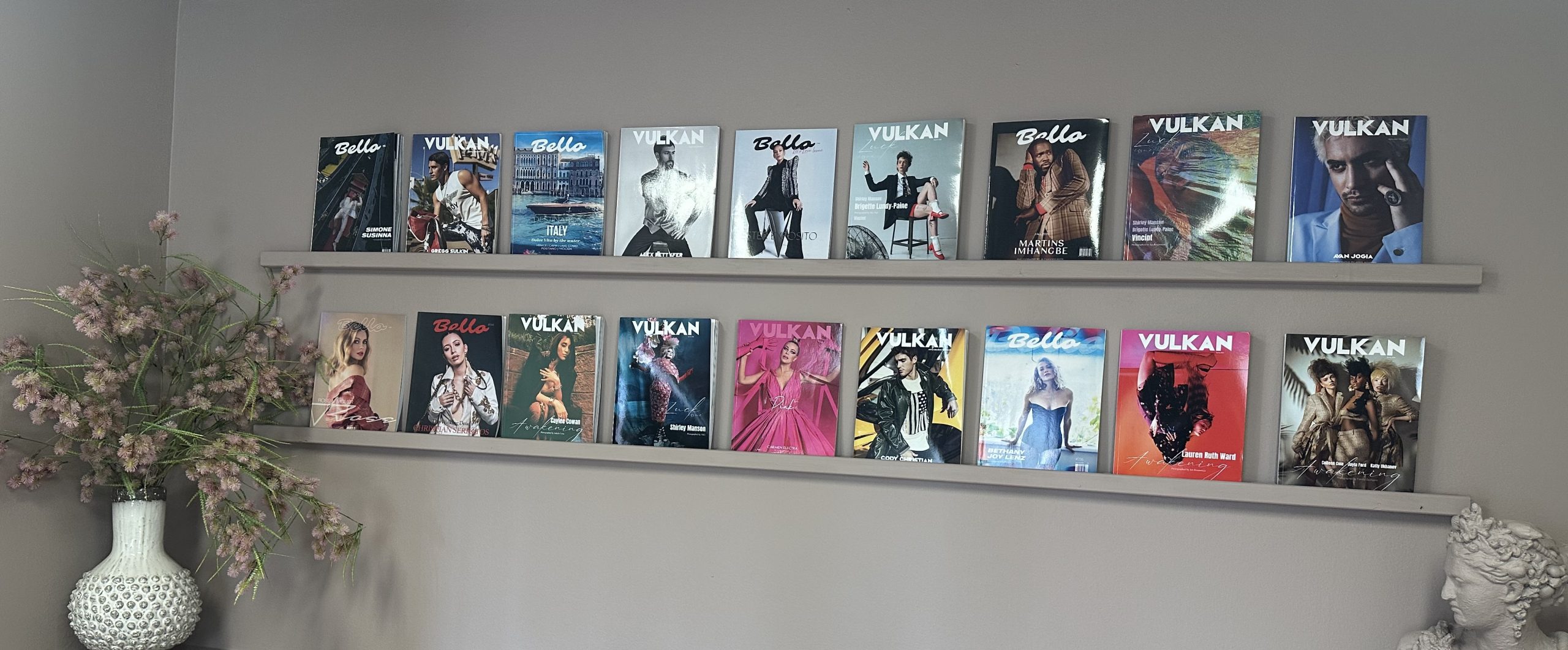
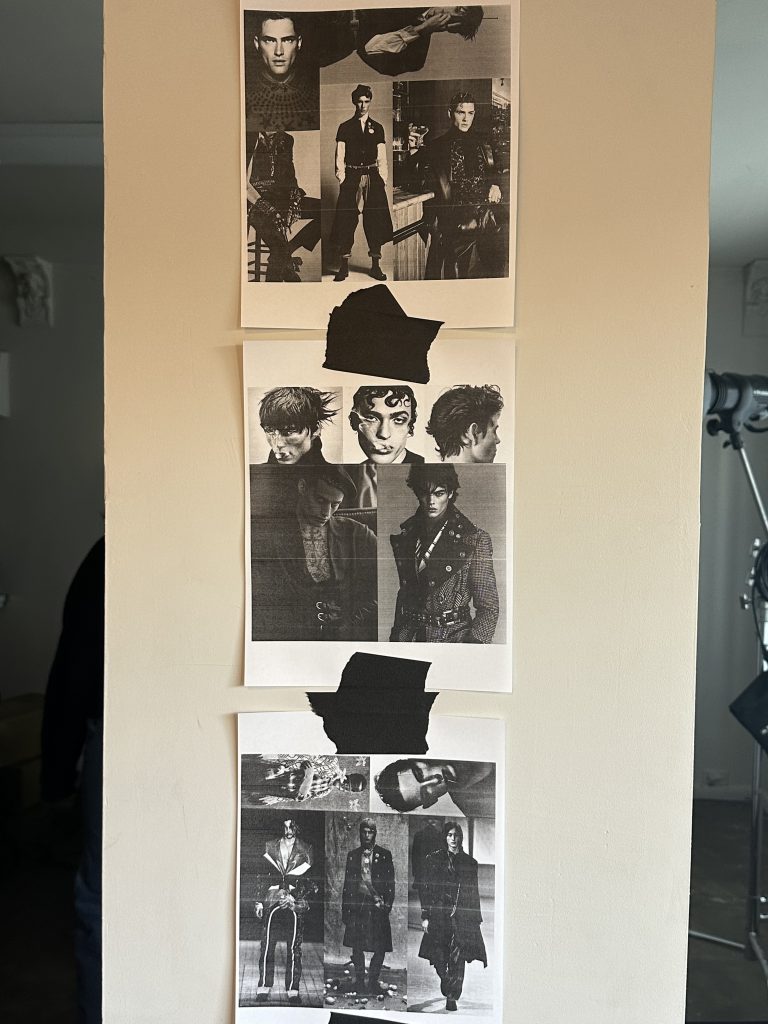
At Maison Privée, I started to understand those answers. I assisted stylists during showroom appointments, helping them pull pieces for clients, and I also contributed to photoshoots for their partner publication, Bello Magazine. These moments showed me how much coordination, communication, and creativity go into even a single shoot. Fashion isn’t just about clothes—it’s about storytelling, branding, and relationships.
Interning at Maison Privée, I learned so much about the PR side of fashion. Through so many unique opportunities, this internship helped me come out of my shell and try new things!
One of the biggest lessons I learned is the importance of putting yourself out there. Opportunities in fashion don’t always come from formal applications alone—they come from conversations, introductions, and being present. Even during my internship, having just one engaging conversation with a stylist almost secured me a spot as her personal assistant! Too bad I live across the country :/
Whether it was interacting with stylists, observing how PR teams communicated with clients, or simply being reliable and engaged in my role, I realized that people notice effort. Being proactive and showing genuine interest goes a long way.
Connections are everything in this industry, but not in the intimidating way it’s often portrayed. It’s less about “who you know” and more about how you build relationships over time. Being kind, professional, and curious can open doors you didn’t even know existed. Even small interactions can lead to future opportunities if you leave a positive impression.
For anyone looking to get into fashion, my biggest advice as someone who is still learning is to start where you are. Use social media as a tool, not just for inspiration but for learning and connecting. Keep up with fashion blogs and companies to know the inside of the industry before you even get in. Follow industry professionals, engage with their content, and pay attention to how trends and branding evolve. Don’t be afraid to reach out, apply for internships, or take on smaller roles to gain experience. Every step adds up.
Caption: Two of my favorite resources are The Business of Fashion and Women’s Wear Daily, who provide readers with all aspects of fashion. With well-written articles and engaging content, I continuously get informed with some of fashion’s top news through these websites.
Fashion is constantly changing, and social media is a huge part of that evolution. It has made the industry more accessible while also more competitive. But that also means there’s space for new voices, new perspectives, and new ideas. You don’t need to have everything figured out to get started—you just need to be willing to take that first step.
Looking back, my journey into enjoying fashion didn’t happen all at once. It started with curiosity, grew through experience, and continues to evolve. If there’s one thing I’ve learned, it’s that getting into fashion isn’t about waiting for the perfect opportunity—it’s about creating your own path and being open to where it takes you.
When I first started thinking about brand identity, I’ll be honest – I thought it was mostly about logos. Colors, fonts, maybe a cool aesthetic if you’re lucky. But the more I’ve been learning, the more I’m realizing that brand identity is really about perception. It’s how people feel when they interact with something, not just how it looks.
One idea that stuck with me from Graphic Design Is for Everyone is that design isn’t just decoration – it’s communication. That completely changed how I look at branding. A logo isn’t just a symbol; it’s a shortcut to meaning. It tells you what a brand stands for before you even read a single word.
A really interesting example of this is the evolution of Mastercard. If you look at their older logos, they were much darker – text-heavy, outlined shapes, very “of their time.” But over the years, they simplified everything. Now it’s just two overlapping circles. No extra clutter. No explanation needed. And somehow, it feels more recognizable, not less.
That shift says a lot about modern branding. Simplicity isn’t boring – it’s strategic. It makes a brand more flexible, more digital-friendly, and honestly, more memorable. It also shows confidence. The Mastercard logo doesn’t need words – everyone already knows who it is.
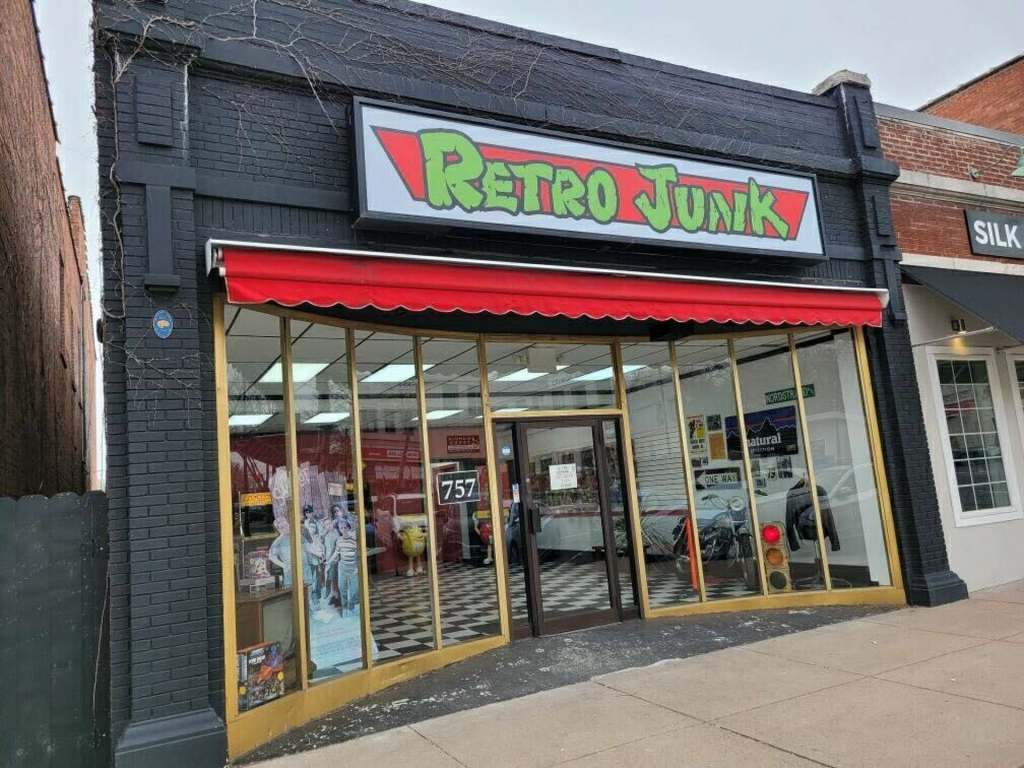
This idea of brand identity has been really relevant in my rebrand for Retro Junk, a local collectibles store near me. Originally, Retro Junk had more of a nostalgic, almost cluttered feel – which made sense for the “retro” vibe – but now I’m trying to balance that with something cleaner and more intentional. Something that still feels fun and gamer-inspired, but also current.
Retro Junk, a collectibles store in Manchester, Connecticut.
And that’s where brand strategy really comes in. It’s not just about making something look good, it’s about deciding which direction you want to go in. Who is this for? What do I want people to associate with this brand? What makes Retro Junk different from everything else out there?
For Retro Junk, I’ve been thinking a lot about audience. Instead of designing for “everyone,” I’m leaning into a Gen Z, gaming-adjacent audience – people who like thrift culture, nostalgia, but also modern internet aesthetics. That changes everything. It affects the tone, the visuals, even the potential name ideas I’ve been brainstorming.
I think that’s something people underestimate about branding: it’s deeply tied to identity, not just visually but conceptually. You’re not just designing a logo – you’re building a personality.
Another important factor I’ve been thinking about is consistency. A strong brand isn’t just one good design – it’s a system. Colors, typography, voice, imagery… everything working together. When brands like Mastercard simplify their identity, they’re not losing meaning – they’re making it easier to apply that meaning across everything, from apps to ads to physical cards.
As I keep working on my rebrand, I’m realizing that the hardest part isn’t designing – it’s deciding. Deciding what to keep, what to cut, and what actually matters. It’s super easy to add more, but much harder to refine these choices.
Overall, this week really shifted how I see branding, and brands in general. It’s not just a visual task—it’s an entire thinking process. A strategy. And honestly, it makes me more excited about what I’m creating, because now it feels less like I’m just “making something look cool” and more like I’m building something with purpose.
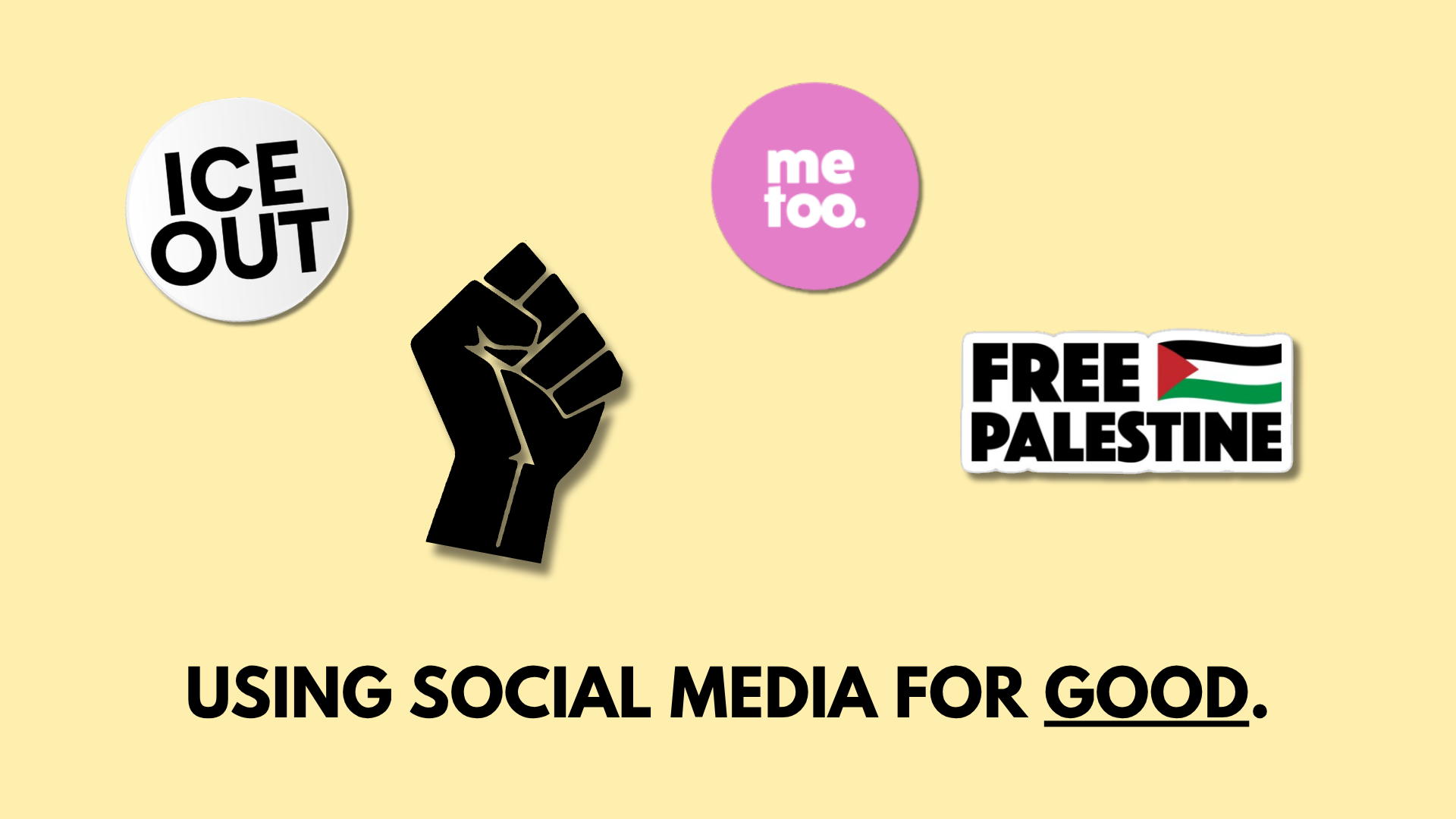
Social media often gets a bad reputation a lot of the time – ruining attention spans, spreading misinformation, all of that good stuff. But besides all of that, we also overlook just how powerful social media can be when it’s used the right way. Social media isn’t just about doomscrolling or new trends; it’s a space where people can connect, speak up, and actually create change, even if it doesn’t always look like traditional activism.
After writing about the limitations of social media, I started to see activism a lot differently. Most of the time, awareness never leads to action. A lot of what we do online – liking posts, reposting videos, adding hashtags – can feel meaningful without actually requiring much effort. That’s where critics like Malcom Gladwell come in, arguing that social media creates “weak ties” that don’t always lead to real, lasting change. And honestly, I get that. Real movements usually take deeper commitment than just clicking a button.
But at the same time, I don’t think that makes social media useless. If anything, I think it shows that its real strength is starting the conversation. Social media has made it so much easier for people to learn about issues they might have never paid attention to before. It amplifies voices – especially marginalized ones – and gives people a way to share experiences on a global scale. That kind of visibility wasn’t always possible.
I also think people underestimate how small actions can build into something bigger. Even if posting or sharing seems “low effort,” it can still create momentum. It introduces people to causes, encourages discussion, and sometimes pushes them to get more involved offline. Social media might not complete the work, but it can definitely start it. One of the biggest examples of this is the Black Lives Matter movement in 2020. Filmed and uploaded by Darnella Frazier at just 17 years old, the video was seen by millions of people in just a couple of days and sparked global protests, inspiring the Black Lives Matter movement.
What makes me most hopeful is how social media connects people. It creates communities around shared values and issues, making people feel less alone and more motivated to care. And while trends can come and go quickly, the connections and awareness they create don’t always disappear as fast as we think.
At the end of the day, I don’t see social media as a perfect solution—but I do see it as a powerful tool. When it’s used intentionally, it can educate, connect, and inspire action. Real change still requires effort beyond the screen, but social media can be the spark that gets people there. And honestly, that’s something worth being optimistic about.
As a beginner editor and project-maker, my ICM508 Audio and Visual Design course helped so much in understanding editing and composition. Before I reflect, I wanted to reference a quote from Tom Schroeppel’s book The Bare Bones Camera Course for Film and Video:
“Making moving pictures is a subjective art. There are no absolute rights and wrongs.”
– Tom Schroeppel, The Bare Bones Camera Course for Film and Video
This book, which I’ve been following this course through, helped me understand so much about composition, audio, editing, and more. Schroeppel’s visual representations, as a visual learner, truly helped me in further understanding these topics and trying them for myself. In the last chapter of the book, “Some Final Words”, Schroeppel lists some final advice to readers before signing off. I enjoyed his point of welcoming criticism, as any criticism can improve your work. Another point I enjoyed was starting off with the basic sequence ““before going all out artsy-craftsy”. This is definitely something I’ve tried before knowing all of these techniques, which led to many of my past projects failing.
Before this course, I considered myself a beginner editor and director, but now consider myself as intermediate after this course. With so much creative freedom and no restrictions, I was able to create fun projects in just a seven-week course. The most useful things I learned was definitely the rules of composition. Although I had a bit of an idea from previous courses, teachings from this module and the textbook really helped me in understanding techniques such as the rule of thirds, balance, leading lines, framing, backgrounds, and more. Now I can’t even take a picture without placing it on one of the guided third lines, which have helped in aesthetic photos a lot! I didn’t really have any struggles in this course, although I definitely want to improve my understanding and execution of continuity. In future projects, I definitely plan on using all of this newly-learned knowledge to improve my work, and get more creative!
J-Cuts in Film
This scene, starting as a conversation between Baby and Joseph, blends into the next scene by introducing the sound and horn of the car pulling up to the diner. The use of the J-cut helps create a smooth, emotionally grounded transition between scenes. As the visuals shift away from the conversation, the ambient sounds of the car continue briefly over the next shot, allowing the audio to lead the edit before the image fully changes. This J-cut softens what could have been an abrupt jump between locations, maintaining narrative continuity while subtly guiding the viewer forward. Rather than feeling like a hard stop or reset, the overlapping sound keeps the scene flowing naturally, reflecting Baby’s internal thoughts as he moves from a conversation with Joseph into a more personal, romantic storyline. The technique works especially well here because it prioritizes character and mood over strict visual continuity, making the transition feel intentional and emotionally connected to Baby’s thoughts rather than purely functional.
L-Cuts on Film
In this scene where Luis (Michael Peña) launches into his fast-paced, comedic story is a strong example of an L-cut used for both humor and clarity for viewers. As Luis continues speaking, the visuals cut away from him and illustrate the events of his story, while his voice carries over uninterrupted. This L-cut allows the audience to stay anchored in Luis’s narration even as the scene jumps across different locations, characters, and moments in time. By letting the audio from the previous shot continue into the next, the edit creates a seamless flow that prevents the sequence from feeling choppy or confusing. The technique also enhances the comedy: the contrast between Luis’s expressive voice and the exaggerated visual reenactments heightens the joke, making the story feel energetic and cohesive rather than fragmented. Overall, the L-cut works especially well here because it prioritizes storytelling rhythm and comedic timing, turning what could be a long exposition into one of the film’s most memorable scenes.
Generation Z’s voracious appetite for collecting — from blind-box toys and limited-edition sneakers to photocards and vintage comics — reflects more than nostalgic hobbyism; it’s a consumer behavior shaped by deliberate design and psychological levers. This paper explores why collecting has become a distinctive cultural practice for Gen Z by bringing together frameworks from behavioral economics (scarcity, loss aversion, and variable rewards), Gestalt principles of perception (figure/ground, closure, and grouping), and multisensory design (tactile, visual, and auditory cues that heighten perceived value). Contemporary product and experience designers intentionally craft emotional and sensory decision pathways — using affordances, depth cues, and surprise mechanics — that turn ordinary purchases into identity-weighted rituals and status signals. Drawing on class readings and additional scholarly and industry sources, this exploratory study will map how these design strategies interact to create compulsive, community-oriented collecting practices among Gen Z.
At its core, the act of collecting taps into fundamental psychological drives that shape how consumers interact with objects, structure, and identity. Recent research in the Journal of Consumer Research shows that one of the most powerful motivations for collecting is a desire for control, as individuals seek structure and order in their possessions by building coherent sets of related items; the closer a collection is to completion, the stronger the motivational pull toward acquiring additional pieces becomes, because completing the set reinforces a sense of mastery over one’s environment and goals (Cao et al., 2025). The article also identifies multiple psychological drivers of collecting behavior: some individuals collect for identity expression, using items to signal personal history or group belonging, while others derive joy, nostalgia, or pleasure from the pursuit itself. These motives underscore that collecting is more than mere acquisition — it involves emotional reinforcement, cognitive fulfillment, and social meaning, making the act of acquiring and organizing objects deeply intertwined with human psychology.
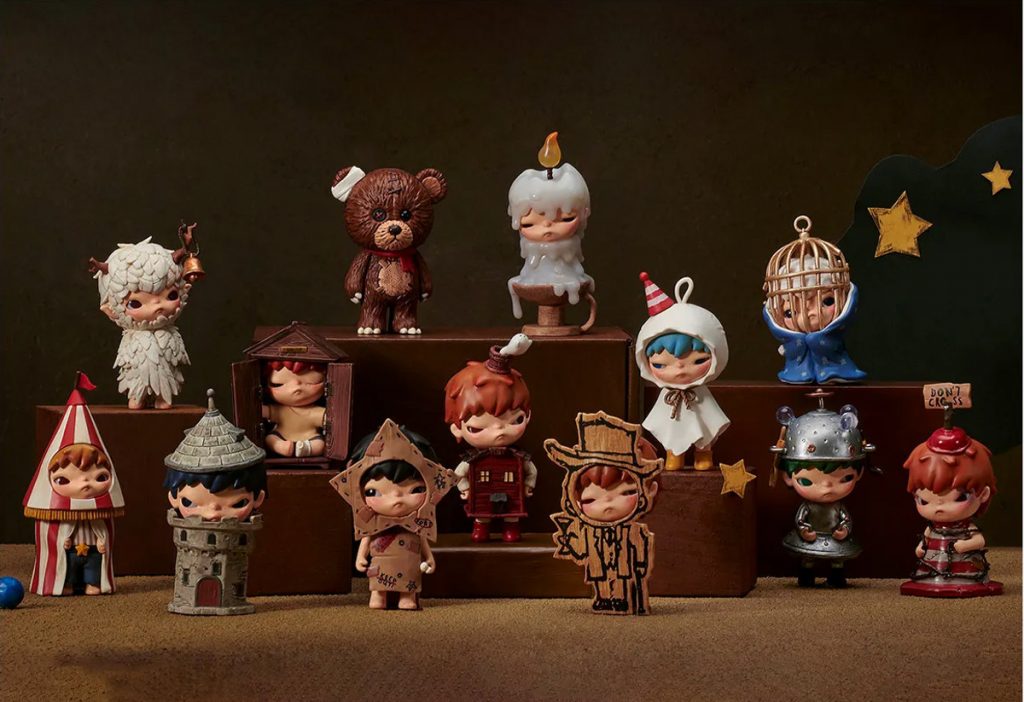
Entire set of POPMART’s Hirono Shelter Series
Getting into behavioral economics, these concepts further amplify these psychological tendencies by shaping the conditions under which Gen Z encounters collectible products. Many contemporary collectibles — from blind boxes to limited sneaker drops — are engineered around scarcity, variable-reward schedules, and anticipatory dopamine cycles, all of which nudge consumers toward repeated purchases. Scarcity operates as a powerful cognitive bias: when an item is framed as rare or part of a finite series, its perceived value increases, and the urgency to act outweighs rational decision-making. Variable rewards, commonly seen in game design and gambling, appear in blind-box culture, where the uncertainty of which item is inside triggers a reward-prediction loop that encourages “just one more” purchase. Loss aversion also plays a role, as consumers fear missing out on a drop or failing to complete a set — a design tactic that pushes them toward quicker, less deliberative choices. As Bridgeable’s design principles highlight, these behavioral levers aren’t accidental; they are strategically embedded in product ecosystems to guide emotional and impulsive decision-making (Bridgeable). In the context of Gen Z, a generation already accustomed to algorithmic personalization and micro-rewards in digital spaces, these mechanisms create a seamless bridge between psychological desire and economic behavior, transforming collecting into a sustained, self-reinforcing cycle.
Intense line for sneaker release!
Another reason behavioral-economic strategies are so effective on Gen Z is that they align with the generation’s broader relationship to uncertainty, reward, and digital culture. Growing up in an environment shaped by algorithmic feeds, micro-trends, and constant content refresh cycles, Gen Z is already conditioned to respond to intermittent reinforcement, a core principle in behavioral economics that increases the likelihood of repeated engagement. Collecting systems — whether in apps like Pokémon Go, K-pop photocard trading, or limited-run fashion drops — mirror the same mechanics: rewards arrive unpredictably, and the “near miss” feeling of almost completing a set keeps users invested. Social proof, another behavioral-economic principle, magnifies this effect. When influencers, friends, or online communities display sought-after items, the perceived value of these objects rises, and individuals become more willing to take economic risks to avoid the social cost of being “left out.” The combined force of digital visibility, reward uncertainty, and community comparison means that the decision to collect is rarely an individual choice; it is a behavior reinforced by everyone around them that was designed to maximize engagement. As a result, Gen Z’s collecting habits cannot be fully understood without acknowledging how behavioral-economic design intersects with their digital upbringing and value systems.
Surprised reactions to blind box openings on social media.
Gestalt principles also play a crucial role in shaping the appeal of collectible items, particularly in how brands design visual systems that emphasize unity, pattern, and completion. In foundational Gestalt theory, the human perceptual system instinctively organizes visual information into meaningful wholes rather than isolated parts — a process driven by principles such as similarity, proximity, and closure. When collectible series use consistent color schemes, repeated character forms, and numbered sequences, they leverage similarity to signal that each piece belongs to a unified whole, making incomplete sets feel visually and emotionally disjointed rather than discrete (Canva Learn). Clusters of items displayed together exploit proximity, leading viewers to perceive grouped objects as belonging together, while closure—our tendency to mentally “fill in missing pieces”—creates internal pressure to complete an unfinished collection (thoughtbot). Even affordances like stackable packaging or interlocking shapes communicate how items relate to one another, further reinforcing the perceptual pull toward collection completion. By tapping into these innate visual tendencies, brands craft collectible ecosystems that feel naturally compelling, making the desire to “finish the set” as much a perceptual instinct as an economic choice.
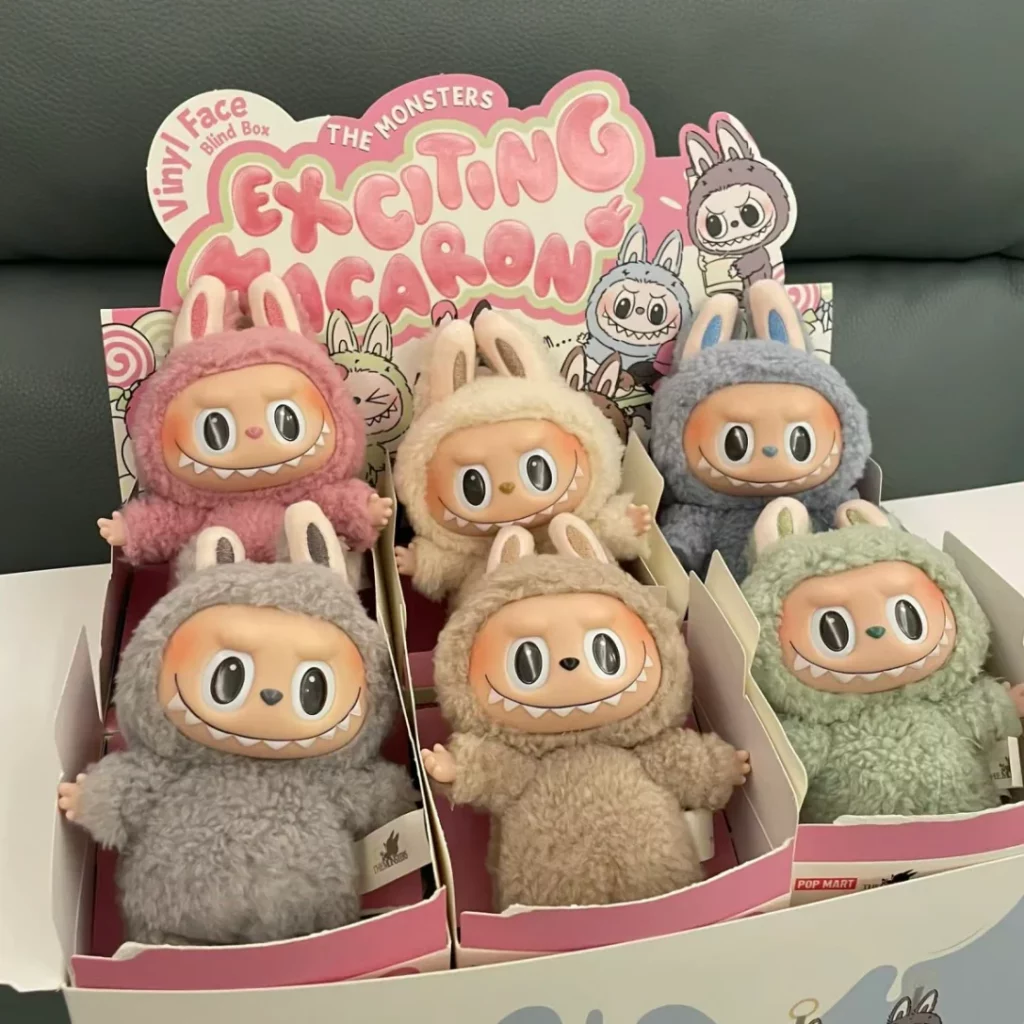
POPMART “Exciting Macaron” Labubu series, one of their most popular sets!
Beyond basic grouping laws like similarity and proximity, Gestalt theory has a rich empirical foundation showing how perceptual organization deeply influences how consumers interpret and emotionally respond to visual forms. A study looking into Gestalt psychology demonstrates that the human visual system automatically organizes elements into coherent wholes, meaning that figure-ground relationships, continuity, and Prägnanz (simplicity and good form) shape not only what we see but how we interpret object sets as unified and meaningful. These perceptual processes operate rapidly and unconsciously, with grouped items capturing attention more effectively and enhancing memory for those visual patterns (Wagemans et al., 2012). Research from Cambridge University shows that Gestalt principles can predict aesthetic preferences for product form — for example, symmetry, parallelism, and continuity each contribute to how consumers judge the harmony and attractiveness of objects in three-dimensional space (Valencia-Romero et al., 2017). These findings go to show that the very structure of collectible sets — from how items are visually related to one another to how they are presented in space — can enhance their appeal and the psychological satisfaction consumers get from assembling them.
While Gestalt principles explain how visual organization drives the desire to complete collections, multisensory design expands this influence beyond sight, engaging the body and emotions more fully in the collecting experience. Collectibles are rarely experienced as purely visual objects; instead, they are designed to be touched, opened, displayed, and even heard. Research on multisensory design emphasizes that engaging multiple senses simultaneously enhances emotional attachment and perceived value, as sensory cues work together to create richer, more memorable experiences. Texture-heavy packaging, the resistance of sealed blind boxes, the sound of foil wrappers, and the weight of a sneaker box all contribute to anticipation and reward, transforming acquisition into a ritual rather than a transaction. These sensory layers reinforce behavioral-economic mechanisms like anticipation and reward prediction, while also strengthening emotional bonds between consumers and objects. For Gen Z, a generation that values experience as much as ownership, multisensory design helps explain why collecting feels immersive and meaningful — not simply because of what the item is, but because of how it is felt, handled, and experienced in the moment of acquisition.
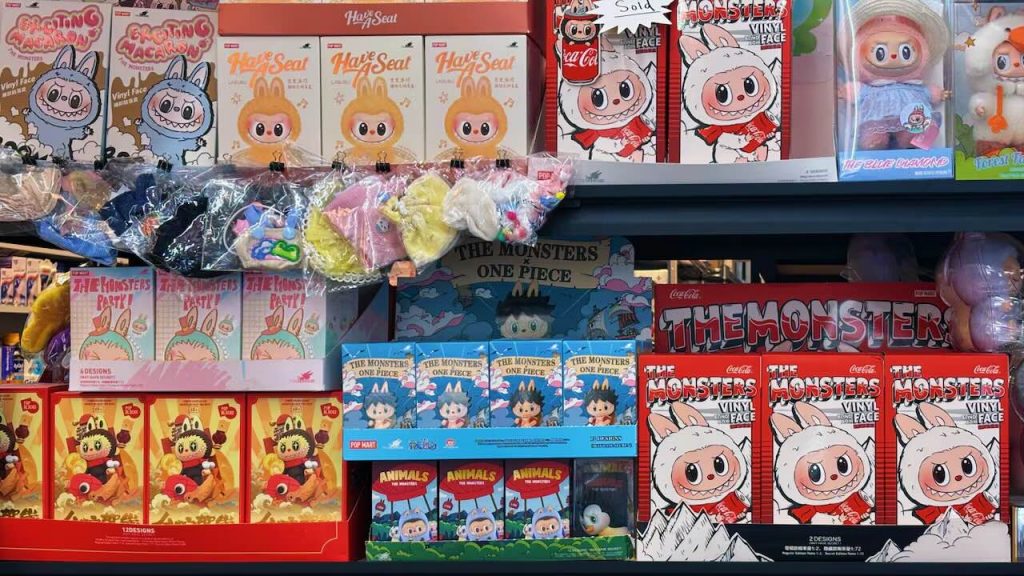
Blind boxes found in a store. Shows the packaging of blind boxes.
Multisensory design heightens the appeal of collectible culture by engaging consumers beyond visual perception, transforming acquisition into an embodied and emotionally charged experience. While speaking about a TED Talk by Jinsop Lee, Akna Marquez explains how “many of life’s greatest pleasures (like eating and sex) are enjoyed deeply because of the presence of multiple senses interacting at the same time,” and that effective design intentionally activates multiple sensory channels to create stronger emotional responses (Marquez, 2025). This principle is especially evident in collectible products, where texture, weight, sound, and even resistance play key roles in shaping anticipation and reward. Similarly, research by creating agency Astriata emphasizes that “Beyond engaging solely through visual elements, we can also stimulate the auditory, olfactory, gustatory, and tactile senses to evoke emotion and improve the user experience,” (Astriata, 2024). For Gen Z collectors, the crinkle of packaging, the smooth finish of a photocard, or the ritualistic act of opening a blind box are not incidental details but central components of value creation. These sensory cues heighten emotional investment at the moment of purchase, reinforcing behavioral-economic mechanisms like anticipation and perceived reward while turning collecting into a ritualized experience. In this way, multisensory design bridges perception and emotion, ensuring that collectibles are not only seen as desirable objects but felt as meaningful experiences.
To get specific, Pop Mart’s rise from niche art-toy maker to a global collectible powerhouse illustrates how multisensory design — combined with psychological and cultural strategies — can turn otherwise “useless” objects into deeply engaging experiences. Central to Pop Mart’s appeal is the blind-box format, where customers don’t know which figure is inside until after they open it, turning the act of unboxing into a moment of suspense, tactile engagement, and emotional payoff that drives repeat behavior and social sharing. The brand’s founder captured this feeling, even saying that “if we make dolls useful, our sales are bound to decline…If the dolls have practical attributes, the next time you feel the desire to buy something, you won’t be so impulsive; instead, you’ll think about whether you already have one at home,” suggesting that the emotional and experiential qualities of the unboxing moment are the real product (D, 2025). This aligns with research showing that blind-box products create “special shopping experiences” that appeal particularly to young consumers through uncertainty, surprise, and emotional gratification, key components of multisensory engagement (Lin, 2023). Pop Mart’s use of vibrant character IPs, tactile packaging, and virality around unboxing turns a simple purchase into a multi-sensory event — one that is seen, touched, and performed publicly on platforms like TikTok and Instagram, where unboxing content acts as user-generated marketing (Jeyaretnam, 2025). The result is a consumer experience that feels playful, personal, and socially rewarding — a powerful combination that has helped Pop Mart transform blind boxes into emotional artifacts of Gen Z culture.
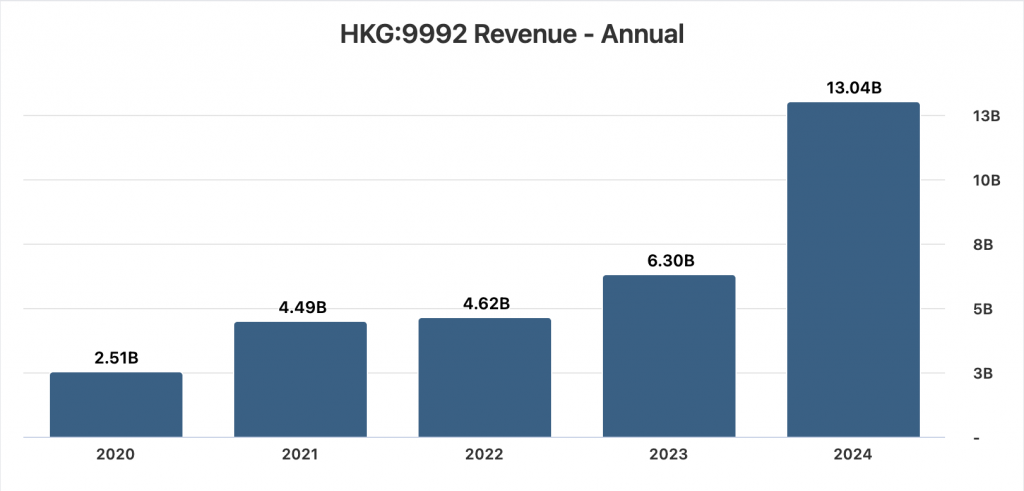
POPMART’s Revenue Annual Chart, StockAnalysis.com
Like Pop Mart’s blind-box collectibles, Pokémon cards rely heavily on multisensory and emotional design to sustain long-term engagement, though they operate through a different material and cultural logic. Pokémon cards, around much longer than Labubus, activate sensory experience through the ritual of pack opening: the tactile resistance of foil wrappers, the distinct smell of freshly opened cards, and the practiced hand motions used to reveal rare cards in a specific order all heighten anticipation and emotional payoff. This sensory choreography transforms each pack into a suspenseful moment, mirroring Pop Mart’s emphasis on surprise while grounding it in nostalgia and familiarity. Emotionally, Pokémon cards differ in that they connect present-day collecting to childhood memory, allowing Gen Z collectors to re-engage with a franchise they encountered early in life while reframing it as an adult hobby, investment, or social performance. Visual design further reinforces this attachment: holographic finishes, rarity symbols, and evolving card aesthetics signal value instantly, guiding emotional response before rational evaluation occurs. While Pop Mart leans into novelty and character IP discovery, Pokémon cards thrive on emotional continuity, blending surprise with nostalgia and long-term brand trust. Together, these phenomena show that successful collectible ecosystems do not rely on randomness alone, but on carefully designed sensory rituals that transform opening, revealing, and owning into emotionally resonant experiences.
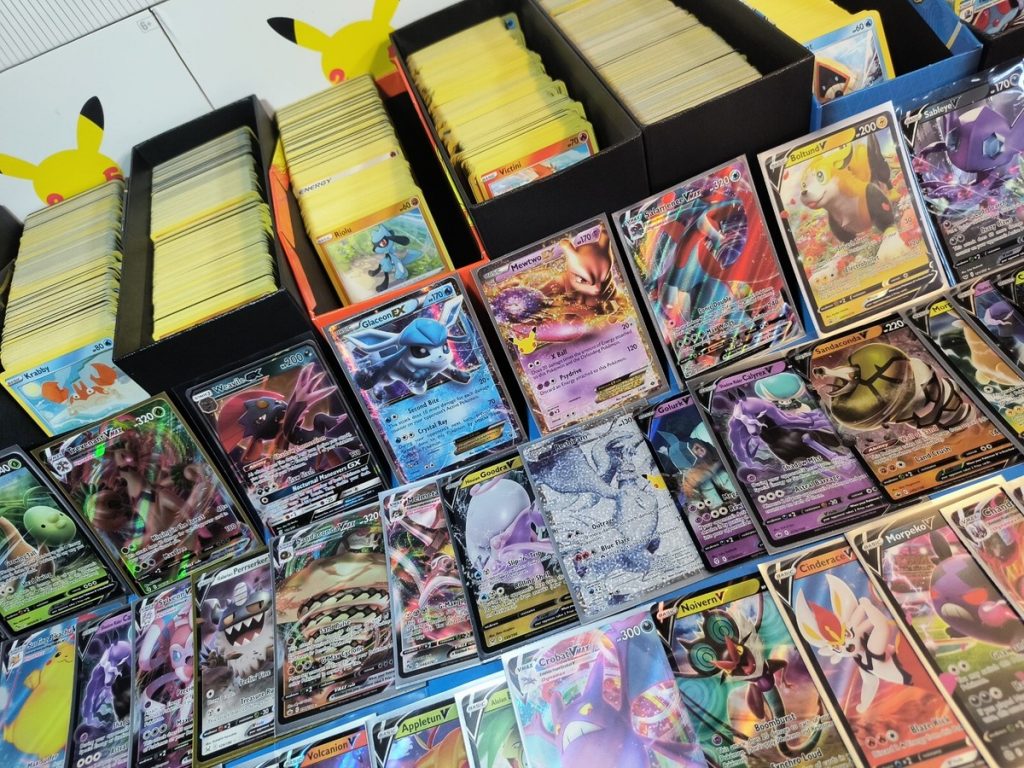
Rare collection of Pokémon cards.
While multisensory design explains how collectibles feel, affordances and interaction design explain how collectors intuitively know what to do with these objects — how to open them, handle them, trade them, and display them. Affordances refer to the perceived actions an object suggests to a user, shaping behavior without the need for explicit instruction. As the Interaction Design Foundation explains, affordances signal the possible actions users can take with an object based on its appearance, meaning that design subtly guides interaction before conscious thought occurs (Interaction Design Foundation). In collectible culture, affordances are deliberately embedded into packaging and product form: tear tabs invite slow reveals, resealable sleeves encourage preservation, and rigid boxes signal value and permanence. Pokémon card packs, for example, afford careful opening and sorting, while Pop Mart boxes afford shaking, stacking, and display. These interaction cues transform collectibles into objects meant to be handled repeatedly rather than consumed once, reinforcing emotional attachment and prolonged engagement. By designing for intuitive interaction, brands reduce friction while increasing ritual, ensuring that collectors not only desire the item but understand how to engage with it in socially and culturally meaningful ways.
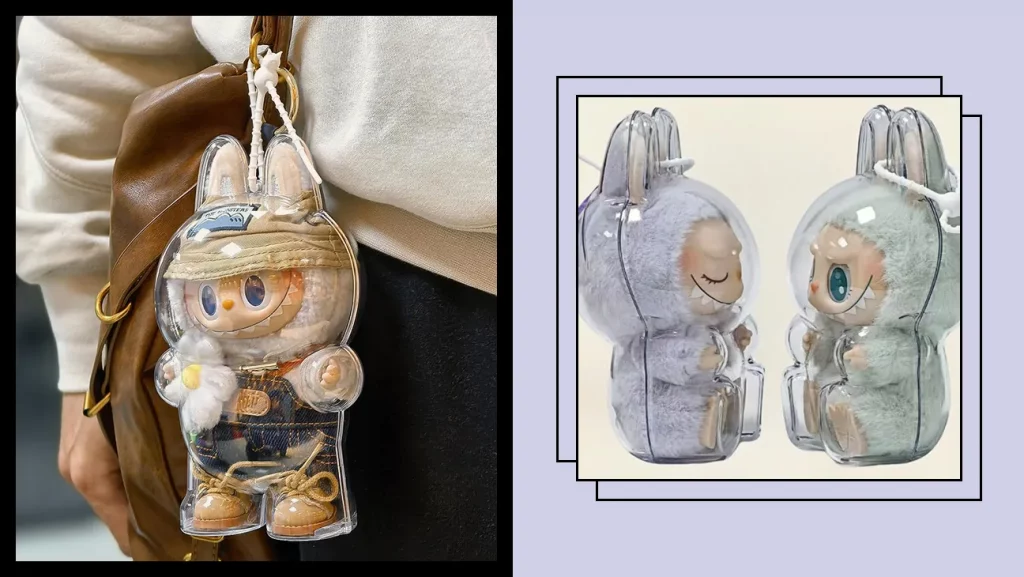
Websites offer cases for Labubu dolls, after trends surged on social media.
Affordances intersect powerfully with Gestalt principles and visual depth cues to shape how collectors perceive and interact with objects in ways that feel intuitive and meaningful. In design theory, an affordance is understood as a signal that suggests how an object may be used — “a perceived signal or clue that an object may be used to perform a particular action,” whether physical or digital, and it relies on perceptual cues to communicate possibilities to the user (Postolovski, 2014). These perceived action cues are effective when they align with familiar visual organization rules: depth cues like shadows, perspective, and layering create a sense of hierarchy and prominence that helps users see which parts of a product or interface are interactive or important. Depth cues are especially relevant in physical packaging and digital displays alike, where contrast, shading, and perspective build a sense of form that attracts attention and suggests how to engage with an object. At the same time, Gestalt principles — such as proximity and similarity — organize elements into visually meaningful groups, so that related affordances appear unified and easy to understand without conscious thought. For example, affording a pull or push action through design features like raised edges or overlapping layers is more effective when those cues are grouped and visually ordered, reducing cognitive load and creating a seamless interaction experience. Together, affordances, Gestalt organization, and depth cues create a perceptual ecosystem where how an object looks and where it appears in space both guide collectors toward intended sensory and emotional engagements, making collectible interactions feel intuitive, satisfying, and instinctive.
Altogether, behavioral economics, Gestalt perception, multisensory design, and affordances reveal that Gen Z’s collecting habits are less about ownership and more about emotional meaning-making and social positioning. Behavioral economics explains why scarcity, uncertainty, and loss aversion motivate repeated purchases, while Gestalt theory explains how visual systems frame collections as incomplete wholes that demand closure. Multisensory design deepens this pull by turning acquisition into ritual, engaging touch, sound, and anticipation in ways that strengthen memory and emotional attachment. Finally, affordances guide interaction intuitively, teaching collectors how to open, handle, preserve, and display items without explicit instruction. Together, these frameworks show that collecting is not a passive response to trends, but an active, embodied experience shaped by design decisions that prioritize feeling over function. For Gen Z, whose consumption habits are deeply intertwined with digital culture and identity performance, collectibles become tools for self-expression — objects that communicate taste, belonging, and emotional resonance rather than practical utility.
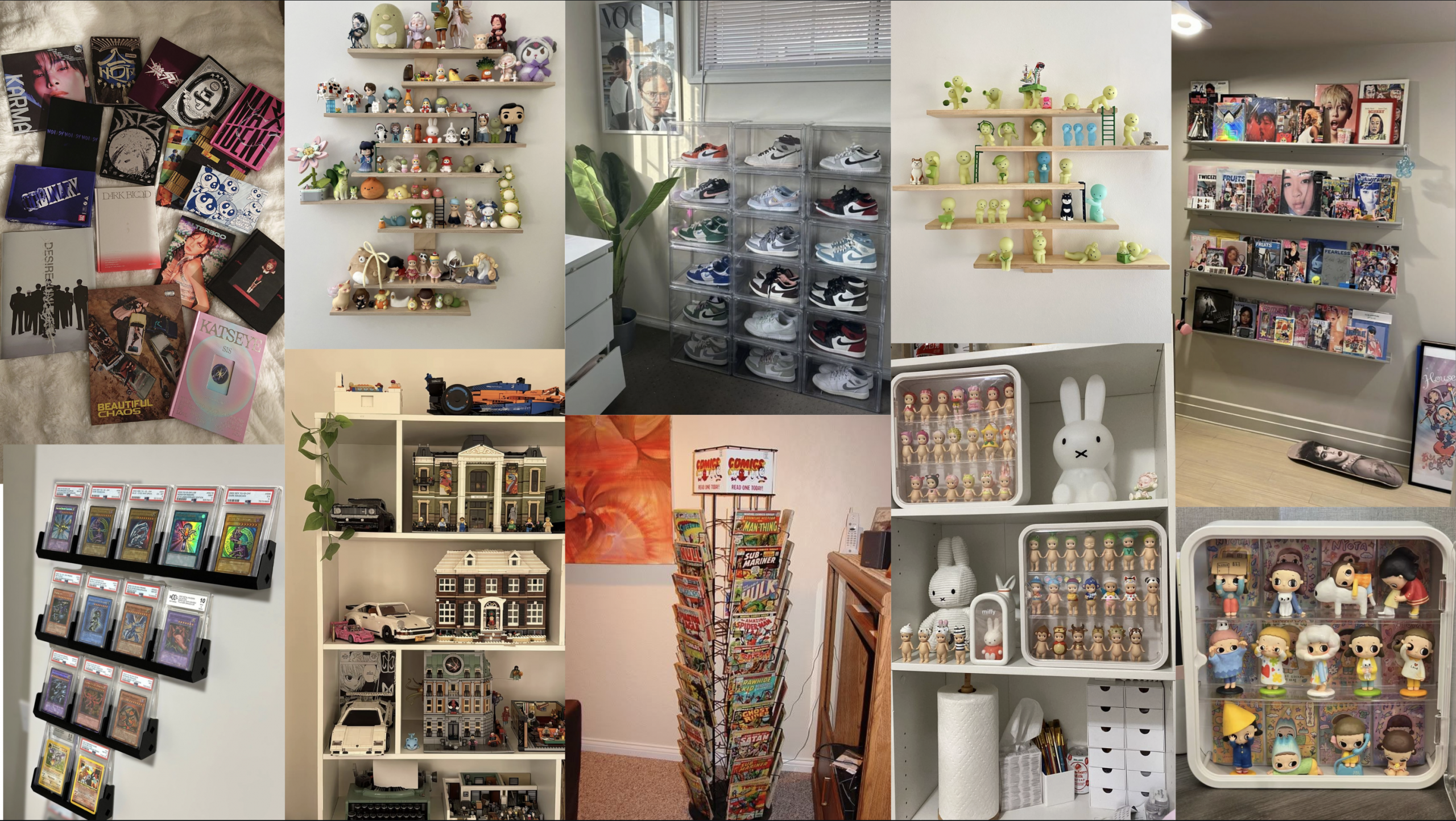
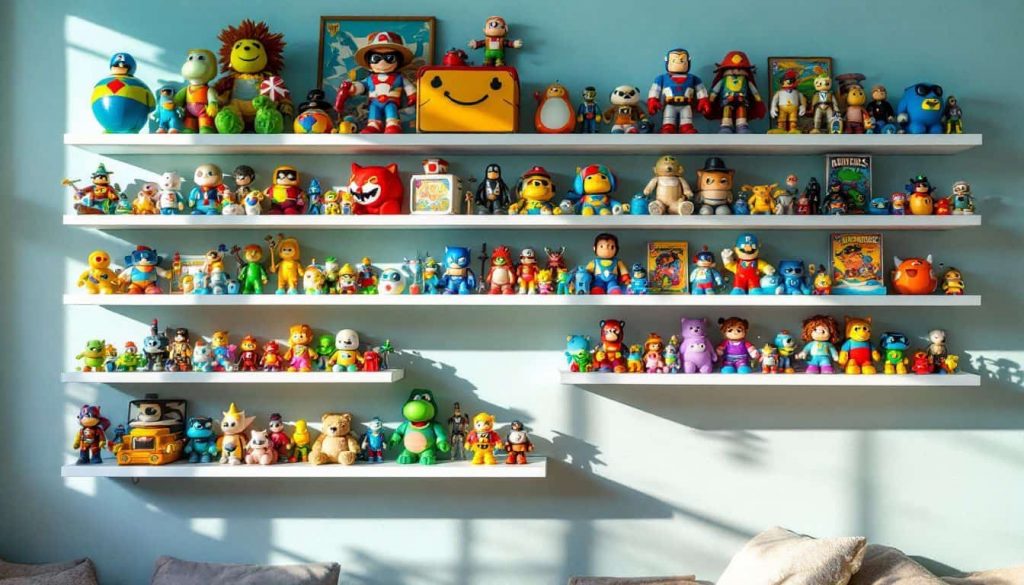
Neat collection of collectibles.
Importantly, these design strategies never act alone. Instead, they are amplified by platforms where visibility, community, and performance matter. As explored in discussions of multisensory experience and interaction design, emotionally resonant objects gain value when they are shared, displayed, and validated by others. A newer synthesis in UX and emotional design research argues that products succeed when they support more meaningful experiences that align with users’ values and identities rather than purely functional outcomes — a framework that maps closely onto Gen Z’s relationship with collectibles (Interaction Design Foundation). Collecting, then, becomes a social language: Pop Mart figures on a shelf, Pokémon cards in protective sleeves, or photocards arranged in binders all signal care, intention, and cultural literacy. By designing for perception, sensation, and interaction simultaneously, brands transform collectibles into emotional artifacts — objects that feel personal, communal, and worth protecting. Ultimately, Gen Z’s obsession with collecting is not irrational; it is the logical outcome of design systems that skillfully align psychology, perception, and emotion with the social desire to belong and be seen.
This paper has explored Gen Z’s obsession with collecting not as a fleeting trend, but as a carefully constructed interaction between psychology, design, and emotion. Through the lenses of behavioral economics, Gestalt perception, multisensory design, and affordances, collecting emerges as an experience engineered to feel intuitive, rewarding, and socially meaningful. Scarcity and uncertainty activate emotional decision-making; Gestalt principles frame collections as incomplete wholes that invite completion; multisensory cues transform purchasing into ritual; and affordances guide interaction in ways that feel natural rather than imposed. Together, these strategies reveal that contemporary collectibles are not valued for utility, but for the emotional, sensory, and social narratives they enable. For Gen Z, collecting becomes a way to externalize identity, participate in community, and create moments of control and pleasure within an otherwise unstable economic and digital landscape.
Ultimately, the success of collectible culture underscores a broader shift in design priorities: from function to feeling, from ownership to experience, and from products to stories. As Ellen Lupton says in Design Is Storytelling, “design embodies values and illustrates ideas. It delights, surprises, and urges us to action,” (Lupton, 2017). Collectibles exemplify this shift perfectly — each blind box, card pack, or display shelf tells a story shaped by anticipation, discovery, and belonging. Understanding Gen Z’s collecting practices, then, is not simply about consumer behavior; it is about recognizing how design leverages perception, sensation, and emotion to create meaning in a culture where experience is often more valuable than possession.
Cao, C. C., Brucks, M., & Reimann, M. (2025). Seeking Structure in Collections: Desire for Control Motivates Engagement in Collecting. Journal of Consumer Research, 52(3), 480–501. https://doi.org/10.1093/jcr/ucae071
Lin, Z. (2023). Exploring Pop Mart Marketing Mechanics and Related Effects. Highlights in Business, Economics and Management, 7, 415-420. https://doi.org/10.54097/hbem.v7i.7004
Wagemans, J., Elder, J. H., Kubovy, M., Palmer, S. E., Peterson, M. A., Singh, M., & von der Heydt, R. (2012). A century of Gestalt psychology in visual perception: I. Perceptual grouping and figure-ground organization. Psychological bulletin, 138(6), 1172–1217. https://doi.org/10.1037/a0029333
Assigned a final project, I now get to create my own mini documentary about any topic of my choosing. With so much to choose from, I wanted to do some final research before narrowing down some topic ideas.
The Bare Bones Camera Course for Film and Video by Tom Schroeppel
Chapter Seven: Lighting
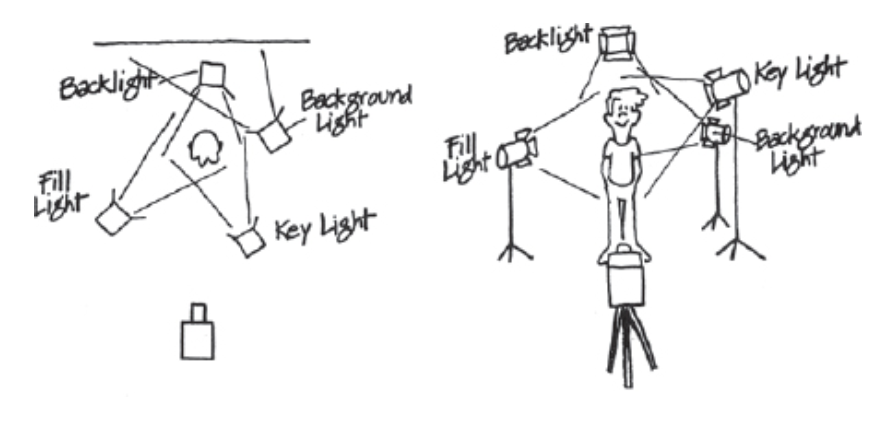
In this chapter, Schroeppel gives readers the best tips on shooting at the right times and getting the right lighting system for your shot. The four-point lighting system (key light, fill light, backlight, background light) is crucial for getting the right lighting for your subject, and was very helpful for a beginner director like myself.
Small excerpt from The Bare Bones Camera Course for Film and Video by Tom Schroeppel, shows efficient four-point lighting system.
I definitely plan on using this system for this project and all future projects, and other advice Schroeppel gave, such as:
Reflectors and fill lights can brighten up shadows cast by backlight and sidelight.
Focusing quartz, broads, and softlights can all help in fixing interior lighting.
Keeping the light high and subjects away from walls can avoid unnatural-looking shadows on walls.
Film shows more shadow detail than video. (WHAT?!)
Chapter Nine: Doing It
This chapter really gives me the confidence to go out and commit to future projects. Schroeppel motivates his readers by guiding them through
By going through each step of the production process such as planning a shoot, creating storyboards, and even working in uncontrolled situations, Schroeppel really sets his readers off with everything they should know! I really liked his point of working in uncontrolled situations when things don’t go according to plan, as he mentions how you can still get great shots by hustling even more to get them, and these situations can actually be even more fun knowing you have working footage. As a person who stresses themselves out easily, this advice definitely calms my nerves for this project, and makes me excited for production!
After researching, here are some examples I found of video storytelling I’ve seen recently:
Up (2009) – “Married Life” Opening Scene
When talking about storytelling, this scene always comes to my mind. With no narration or dialogue at all, this scene takes viewers through the couple’s entire married life, all the way to the end. Through ambient sounds and the fun music turning sad as the scenes go along, viewers can feel so many emotions throughout just this opening scene. One of my favorite storytelling scenes, this scene was incredibly well produced, as it tells a story of a couple’s entire marriage in just a five minute clip.
Piece By Piece Movie Clip – I Loved Music (2024)
This entire movie was incredibly well produced and took a new turn on biopics, as the entire movie showcased Pharell William’s life in Lego. Even interviewed guests, such as Pusha T, Snoop Dogg, and Kendrick Lamar were all Lego pieces telling his story. This scene in particular was when Pharrell Williams talked about his synesthesia, and how he can see colors through his mind’s eye. I love how visual and colorful they ended up making the scene, by letting the song fade in and take over his room. This really shows how music took over in this moment, and they took the time to show viewers how synesthesia may look in a Lego world. Overall, this movie is incredible to watch (highly recommend!) and this scene captures one important part of his life in an amazing way.
I didn’t really want to include a scene from this show because of how vulgar some language and scenes were, but “The Idol” written by Abel Tesfaye (The Weeknd), Sam Levinson, and Reza Fahim became a flop in 2023 after its release. Viewers complained of the show being too explicit, but also had confusing writing and awkwardness surrounding the acting. The show attempted to combine pop-star fantasy with a dark psychological descent, but its storytelling ultimately ruined everything. The characters were pretty inconsistent throughout and the show lacked a clear narrative arc with scenes often jumping around one another. Many viewers also noted how many of the more provocative scenes were made just to add in more provocative scenes, not to serve the show’s purpose at all. For a project with huge hype among Gen Z, “The Idol” became a prime example of how writing without structure leads to a storytelling failure.
Creating My Own Documentary: Pre-Production
In creating my own documentary, I already had some ideas in mind. I’ve always wanted to create a ‘mockumentary’, similar to the style of the hit show The Office. In doing so, I am attempting to create a mockumentary of my cat, and his daily activities. Since all he does is sleep, I thought adding my own narration and interview would spice up the video. All in all, I am planning to utilize everything I’ve used in this semester to create this documentary, and make it engaging for viewers.
View my planning document here (and please note, details may change!!).
This week, I will be going over everything I learned involving continuity editing, defined by Adobe as using “a variety of classic film editing techniques to blend multiple camera shots — some taken at different times or even different locations — into a seamless, consistent narrative” (What is continuity editing in film?).
In an effort to learn more, I read chapters three and four of Tom Schroeppel’s The Bare Bones Camera Course for Film and Video, learning about both basic sequence and screen directing when shooting.
The Bare Bones Camera Course for Film and Video
Chapter Three: Basic Sequence
This chapter really breaks down the “basic sequence” — that familiar progression from a wide shot to a medium to a close-up. It’s so common you barely notice it, but once Schroeppel lays it out, you realize how much deliberate planning sits behind something that feels so effortless. The wide shot grounds the viewer in the space, the medium pulls you closer into the action, and the close-up zeroes in on the emotional or informational details that matter most. Schroeppel makes it clear that good sequencing isn’t about shooting pretty angles—it’s about building a logical visual flow. That’s why matching action from shot to shot is such a big deal. When movement carries cleanly across cuts, the story feels like it’s unfolding in real time, even if you’re jumping between lenses and camera positions. After reading this chapter, I may never watch some of my favorite films the same!!
Chapter Four: Screen Directing
This chapter digs into screen direction—one of those concepts that seems invisible until someone finally points it out. Schroeppel breaks down how consistent left-to-right or right-to-left movement anchors the viewer’s sense of where characters are in relation to each other, which I thought was really interesting. When someone walks across the frame or turns their head, they need to maintain the same directional flow in the next shot; otherwise, the audience feels an instant, almost subconscious jolt of confusion. That’s where the 180-degree rule comes in. By staying on one side of the imaginary line between subjects, filmmakers preserve eyelines, geography, and the sense that everyone is actually occupying the same space. Even a small, accidental shift can make a character look like they’re suddenly facing the wrong way, which is why this rule is such a staple in both filming and editing.
But the chapter also makes it clear that screen direction isn’t just about avoiding mistakes—it’s a tool that can be bent or broken for effect. Filmmakers can intentionally cross the line to signal a shift in energy or perspective, as long as the audience is guided through the transition with a neutral shot, a motivated camera move, or a cutaway that resets spatial logic. Great examples of this show up in tense scenes where directionality shapes mood: medium shots ground us in the physical layout of a cramped space, while careful cutaways and sound design hint at action just outside the frame. Nothing feels decorative; every shot is chosen to control attention, guide emotion, and maintain clarity. By the end of the chapter, it becomes obvious that screen direction isn’t just a technical rule—it’s a subtle, powerful way to make movement readable and storytelling intentional.
Here are some examples of smoother continuity editing seen throughout projects:
The Hunger Games: Catching Fire – Katniss Training Scene
In general, Catching Fire uses smooth continuity when showing Katniss moving through the Training Center. In this scene, the editors match her movement across angles so each cut feels like a natural continuation of her actions. Wides establish the space, mediums highlight strategy or tension, and close-ups capture emotional beats. It’s a clean example of how continuity keeps large environments understandable. Keeping close to Katniss in this scene, we can feel how intimidating or important this drill must be, while also seeing her perfect accuracy with her bow from farther shots.
Stranger Things: Season Four, Episode Four – Max’s Song Scene
This scene cuts between wide shots of Max in the Upside Down, close-ups of her terrified expressions, and medium shots following her as she runs. Even though the angles shift constantly, the motion stays smooth and aligned with the music. That continuity keeps the tension rising without confusing the viewer, and it shapes a clear emotional narrative — Max fighting for her life, her friends fighting for her, and the desperate countdown created by the beat of the song.
Crazy Rich Asians – Wedding Scene
This beautiful, emotional wedding scene uses both wide and medium shots to establish the scale of the ceremony, then close-ups to highlight character reactions and the moment’s intimacy. Every cut aligns with the movement of the bride or the flow of the water down the aisle. Combined, everything is smooth, romantic, and visually coherent — perfect for showing continuity in a non-action context.
Editing My Own Tutorial
When creating my own tutorial using continuity editing, I wanted to make sure I had an engaging, fun idea. Since I’m into fashion, I thought a styling video would fit well! For this tutorial, after a cold day trip to New York I thought tying a scarf would be fun, since there’s so many ways to do so. Using two different angles, I was able to show my audience how to tie a scarf three different ways, all pretty simple. In the end, I really liked how this tutorial came out, and using multiple angles really helped in assisting my ideas!








.png?width=1302&height=8956&name=Color%20Psychology%20-%20Complilation-72%20(1).png)