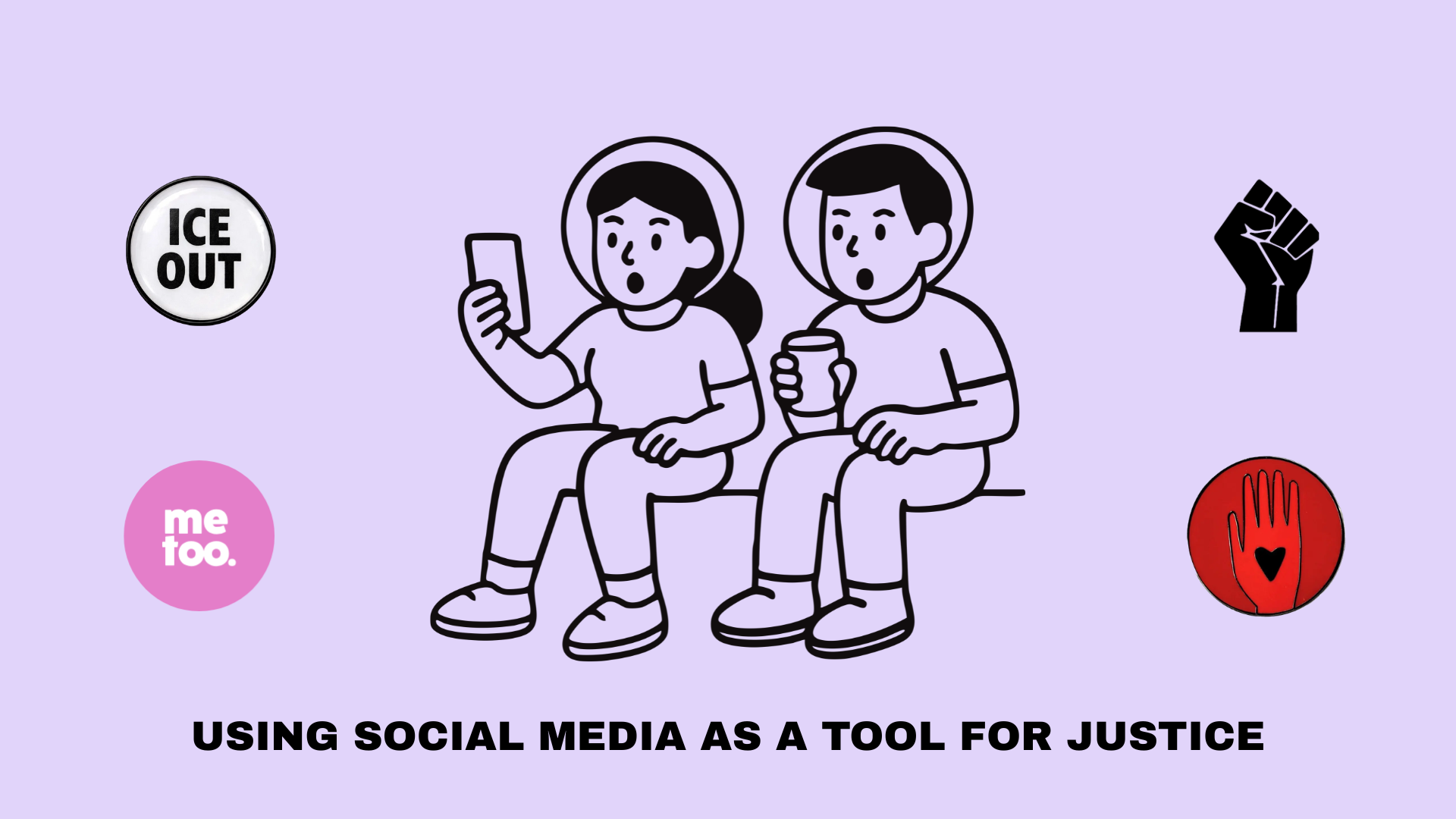
When we think about social media today, it’s easy to associate it with trends, influencers, or even spreading misinformation. But during major global and political movements, social media has proven it can be a very powerful tool. It can inform, connect, and sometimes even challenge systems of power.
One huge example is the Arab Spring. At first glance, it almost feels like social media “caused” these revolutions, but it’s a bit more complicated than that. Social media platforms like Twitter and Facebook gave people a space to share information, organize protests, and show the entire world what was happening in real time. Hashtags like #egypt and #libya connected millions of people into one conversation, creating what researchers call “issue publics,” where information can spread quickly during major events (Bruns et al., 2013).
It is also important to note, however, that social media didn’t single-handedly topple governments. According to the research, it acted more like a tool – something activists used to amplify their voices, but not the sole driver of change (Bruns et al., 2013). People were still physically protesting, organizing on the ground, and risking their lives; social media just made those efforts more visible and connected.
What really stands out to me is how social media allows everyday people – not just politicians or journalists – to become part of the conversation. During the Arab Spring, videos, tweets, and firsthand accounts were shared globally within seconds. Even when governments tried to shut down the internet, people found ways around it just to keep their voices heard. This says a lot about how powerful these platforms can be when people are determined to use them.
We’ve also seen similar patterns more recently, when looking at movements like Black Lives Matter which gained massive attention online during the COVID pandemic. Social media has become a space for education, activism, and unity all at once. It gives people the ability to raise awareness, share resources, and challenge those in power.
With that being said, social media isn’t perfect. One major issue is misinformation. Just like it can spread awareness quickly, it can also spread false information just as fast. And in political movements, that can be dangerous. It can confuse people, create division, or even weaken a cause. This is why knowing the difference between true and false information is so important!!
At the end of the day, social media is a tool, not a solution. It can amplify voices, build communities, and bring global attention to injustice. But real change still requires action beyond the screen. While social media platforms give celebrities and influencers both power and accessibility, it is what they choose to do with that power that really makes a difference.
Works Cited
Bruns, A., Highfield, T., & Burgess, J. (2013). The Arab Spring and Social Media Audiences: English and Arabic Twitter Users and Their Networks: English and Arabic Twitter Users and Their Networks. American Behavioral Scientist, 57(7), 871-898.
Leave a Reply