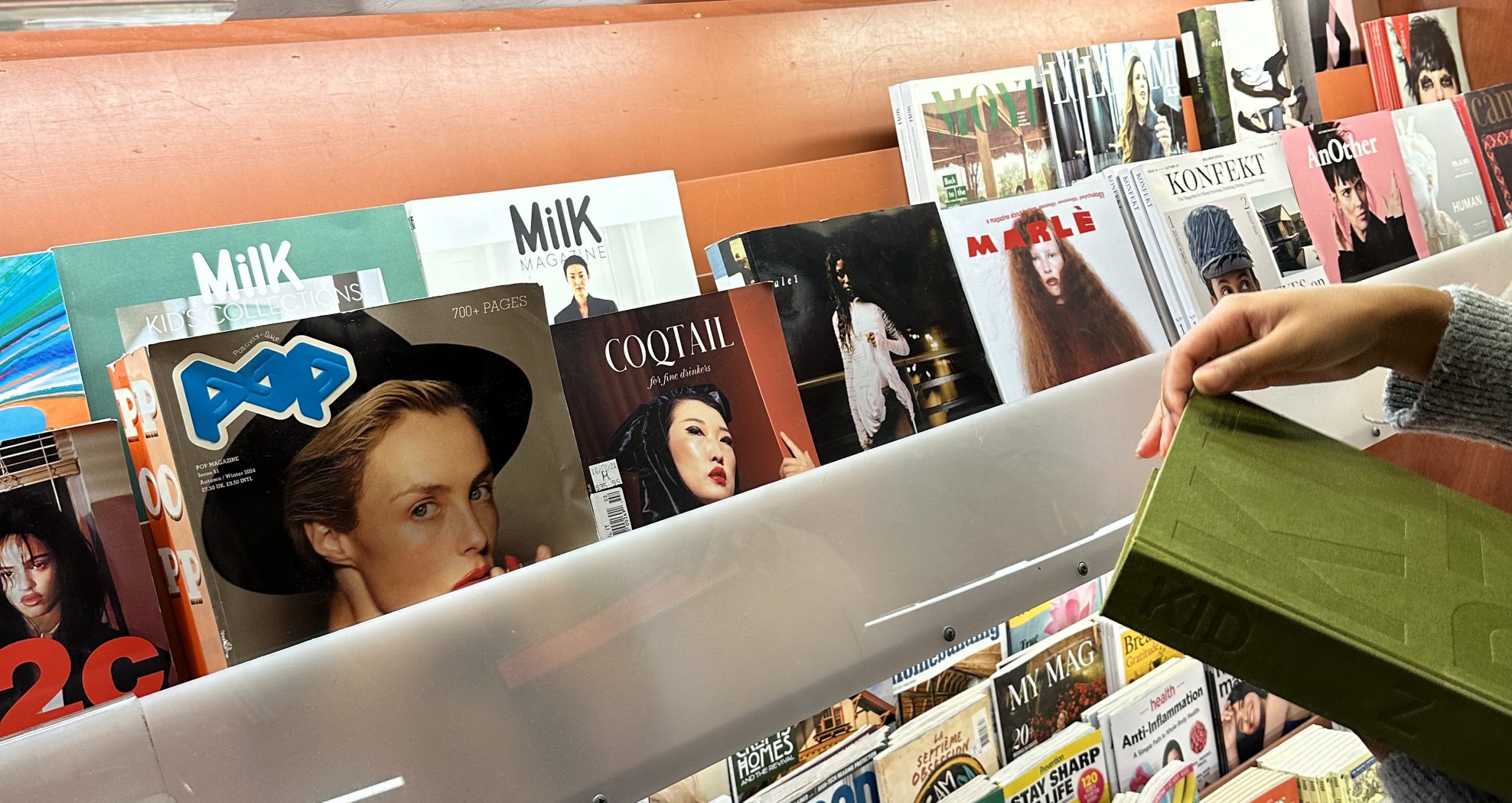
When was the last time you picked up a fashion magazine?
Not scrolled past a runway clip, or liked an outfit on Instagram. Not saved a trend on TikTok.
I mean actually sat down, flipped through the pages, and spent time with it.
If you’re anything like me—or honestly, like most people today—it’s probably been a while. Which is something I have become extremely interested in pertaining to the fashion industry. Over time, I have created essays and white papers (PDF linked below) about this topic; the rapid decline of today’s print media.
When fashion magazines first became popular, they weren’t just a source of inspiration—they were the way people experienced fashion. Publications like Vogue (founded in 1892) or Harper’s Bazaar (1867) shaped trends, introduced designers, and told stories through carefully curated pages.
But today, fashion mostly lives online.
According to research by Gitnux, nearly half of U.S. adults already consume magazines digitally, and print revenue is expected to keep declining over the next few years. We’ve also seen major shifts—magazines reducing issues, or even going fully digital (cough… Teen Vogue).
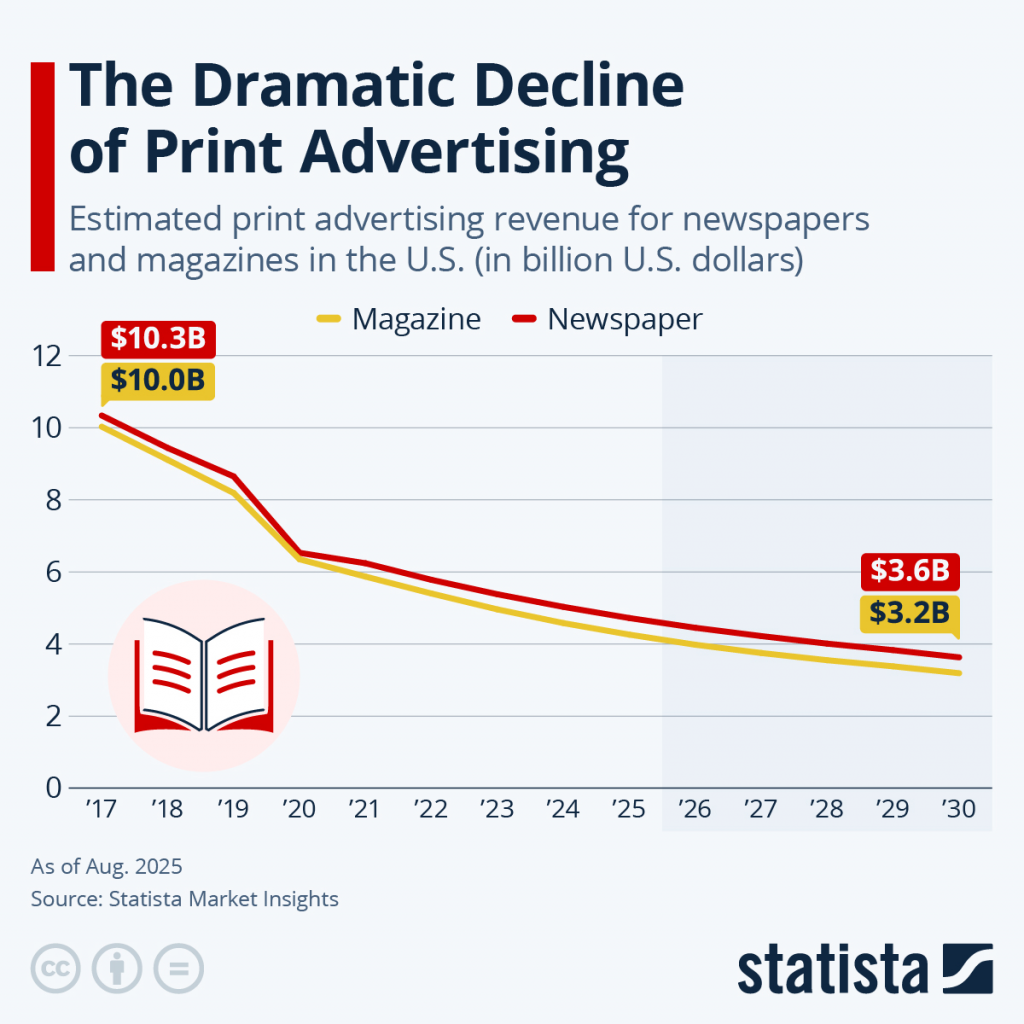
At first glance, that makes sense. Digital is faster, cheaper, and more accessible.
So what is the true problem here?
The problem isn’t just digital media—it’s how we interact with it.
In my white paper, I focused a lot on the idea of attention. Specifically, how social media has completely reshaped our ability to focus on anything for a long period of time.
Think about it: the average person spends hours a day on their phone, constantly switching between apps, videos, and posts. Fashion content—especially on platforms like TikTok or Instagram—is often consumed and scrolled past in seconds. Designers can spend months creating a collection… only for someone to watch a clip of it for three seconds before scrolling. This creates an entirely different relationship with fashion.
What really stood out to me in my research is how this affects not just magazines, but the meaning of fashion itself. In the past, fashion used to feel more like storytelling; something you studied, interpreted, and appreciated over time. Now, it often feels more disposable. Trends come and go faster than ever, largely driven by algorithms and viral moments.
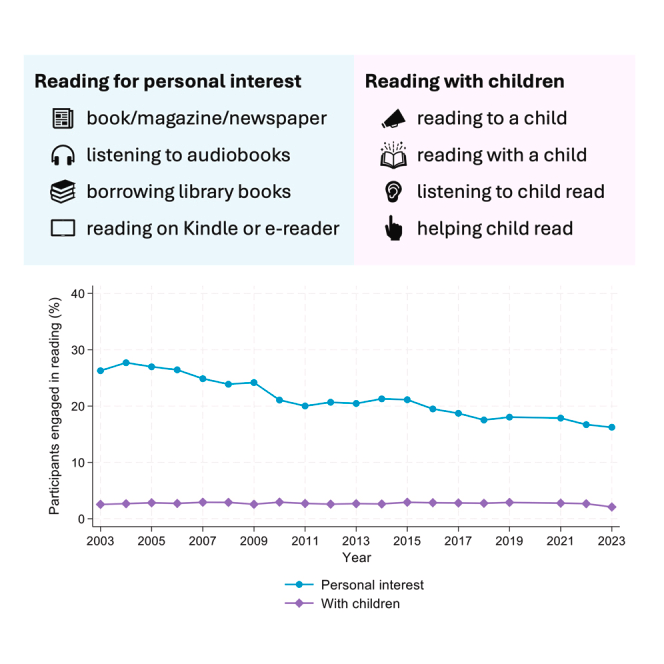
There’s also been a noticeable decline in reading overall over the past 20 years. Fewer people are engaging with long-form content, which was once the backbone of fashion media. And when we lose that, we lose context – why something matters, who created it, and what it represents.
Even within the industry, this massive shift is causing burnout. Faster trend cycles mean more pressure, less time to create, and less room for meaningful work. This, in time, has resulted in the decline of fashion-related careers as well, declining 30% since 2014 according to New York news outlet The City.
In high hopes, I don’t think print media is disappearing completely. I think it’s becoming something else. Almost like a luxury. A moment to slow down in a culture that’s constantly speeding up.
In my research, I talked about concepts like focus, flow, and deep work explained by Johann Hari – basically, the idea that meaningful creativity requires time and attention. And maybe that’s exactly what print still offers: it forces you to pause and sit with fashion instead of just skimming past it.
So maybe the question isn’t “Is print fashion dying?”
Maybe it’s: Do we still know how to engage with fashion in a deeper way?
Because at the end of the day, fashion hasn’t lost its meaning—we’ve just changed how we experience it.
View my more in-depth white paper here!
Works Cited
Bone, J. K., Bu, F., Sonke, J. K., & Fancourt, D. (2025). The decline in reading for pleasure over 20 years of the American Time Use Survey. IScience, 113288–113288. https://doi.org/10.1016/j.isci.2025.113288
David, G. (2024, September 4). New York’s Fashion Industry Is in Dangerous Decline, New Study Warns. THE CITY – NYC News. https://www.thecity.nyc/2024/09/04/new-york-fashion-week-industry-decline-partnership/
Fleck, A. (2025, November 26). The Dramatic Decline of Print Advertising. Statista Daily Data; Statista. https://www.statista.com/chart/35520/estimated-print-advertising-revenue-in-the-us/?srsltid=AfmBOoqJ8Gsfd5knhRaiO4EeKI4qde7bL-iHj-QhD4Lwi8sREMa96x0H
Sharma, P. (2026, February 13). Magazine Industry Statistics (E. Santos, Ed.). Gitnux.org. https://gitnux.org/magazine-industry-statistics/
Leave a Reply