As a beginner editor and project-maker, my ICM508 Audio and Visual Design course helped so much in understanding editing and composition. Before I reflect, I wanted to reference a quote from Tom Schroeppel’s book The Bare Bones Camera Course for Film and Video:
“Making moving pictures is a subjective art. There are no absolute rights and wrongs.”
– Tom Schroeppel, The Bare Bones Camera Course for Film and Video
This book, which I’ve been following this course through, helped me understand so much about composition, audio, editing, and more. Schroeppel’s visual representations, as a visual learner, truly helped me in further understanding these topics and trying them for myself. In the last chapter of the book, “Some Final Words”, Schroeppel lists some final advice to readers before signing off. I enjoyed his point of welcoming criticism, as any criticism can improve your work. Another point I enjoyed was starting off with the basic sequence ““before going all out artsy-craftsy”. This is definitely something I’ve tried before knowing all of these techniques, which led to many of my past projects failing.
Before this course, I considered myself a beginner editor and director, but now consider myself as intermediate after this course. With so much creative freedom and no restrictions, I was able to create fun projects in just a seven-week course. The most useful things I learned was definitely the rules of composition. Although I had a bit of an idea from previous courses, teachings from this module and the textbook really helped me in understanding techniques such as the rule of thirds, balance, leading lines, framing, backgrounds, and more. Now I can’t even take a picture without placing it on one of the guided third lines, which have helped in aesthetic photos a lot! I didn’t really have any struggles in this course, although I definitely want to improve my understanding and execution of continuity. In future projects, I definitely plan on using all of this newly-learned knowledge to improve my work, and get more creative!
J-Cuts in Film
This scene, starting as a conversation between Baby and Joseph, blends into the next scene by introducing the sound and horn of the car pulling up to the diner. The use of the J-cut helps create a smooth, emotionally grounded transition between scenes. As the visuals shift away from the conversation, the ambient sounds of the car continue briefly over the next shot, allowing the audio to lead the edit before the image fully changes. This J-cut softens what could have been an abrupt jump between locations, maintaining narrative continuity while subtly guiding the viewer forward. Rather than feeling like a hard stop or reset, the overlapping sound keeps the scene flowing naturally, reflecting Baby’s internal thoughts as he moves from a conversation with Joseph into a more personal, romantic storyline. The technique works especially well here because it prioritizes character and mood over strict visual continuity, making the transition feel intentional and emotionally connected to Baby’s thoughts rather than purely functional.
L-Cuts on Film
In this scene where Luis (Michael Peña) launches into his fast-paced, comedic story is a strong example of an L-cut used for both humor and clarity for viewers. As Luis continues speaking, the visuals cut away from him and illustrate the events of his story, while his voice carries over uninterrupted. This L-cut allows the audience to stay anchored in Luis’s narration even as the scene jumps across different locations, characters, and moments in time. By letting the audio from the previous shot continue into the next, the edit creates a seamless flow that prevents the sequence from feeling choppy or confusing. The technique also enhances the comedy: the contrast between Luis’s expressive voice and the exaggerated visual reenactments heightens the joke, making the story feel energetic and cohesive rather than fragmented. Overall, the L-cut works especially well here because it prioritizes storytelling rhythm and comedic timing, turning what could be a long exposition into one of the film’s most memorable scenes.
Assigned a final project, I now get to create my own mini documentary about any topic of my choosing. With so much to choose from, I wanted to do some final research before narrowing down some topic ideas.
The Bare Bones Camera Course for Film and Video by Tom Schroeppel
Chapter Seven: Lighting
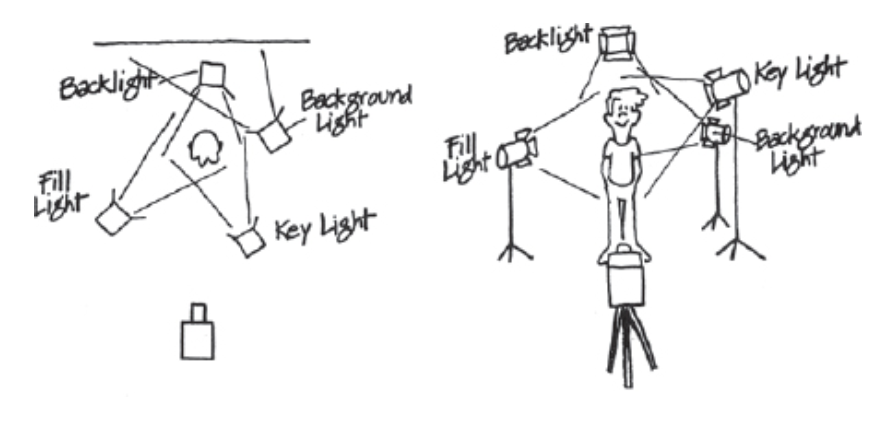
In this chapter, Schroeppel gives readers the best tips on shooting at the right times and getting the right lighting system for your shot. The four-point lighting system (key light, fill light, backlight, background light) is crucial for getting the right lighting for your subject, and was very helpful for a beginner director like myself.
Small excerpt from The Bare Bones Camera Course for Film and Video by Tom Schroeppel, shows efficient four-point lighting system.
I definitely plan on using this system for this project and all future projects, and other advice Schroeppel gave, such as:
Reflectors and fill lights can brighten up shadows cast by backlight and sidelight.
Focusing quartz, broads, and softlights can all help in fixing interior lighting.
Keeping the light high and subjects away from walls can avoid unnatural-looking shadows on walls.
Film shows more shadow detail than video. (WHAT?!)
Chapter Nine: Doing It
This chapter really gives me the confidence to go out and commit to future projects. Schroeppel motivates his readers by guiding them through
By going through each step of the production process such as planning a shoot, creating storyboards, and even working in uncontrolled situations, Schroeppel really sets his readers off with everything they should know! I really liked his point of working in uncontrolled situations when things don’t go according to plan, as he mentions how you can still get great shots by hustling even more to get them, and these situations can actually be even more fun knowing you have working footage. As a person who stresses themselves out easily, this advice definitely calms my nerves for this project, and makes me excited for production!
After researching, here are some examples I found of video storytelling I’ve seen recently:
Up (2009) – “Married Life” Opening Scene
When talking about storytelling, this scene always comes to my mind. With no narration or dialogue at all, this scene takes viewers through the couple’s entire married life, all the way to the end. Through ambient sounds and the fun music turning sad as the scenes go along, viewers can feel so many emotions throughout just this opening scene. One of my favorite storytelling scenes, this scene was incredibly well produced, as it tells a story of a couple’s entire marriage in just a five minute clip.
Piece By Piece Movie Clip – I Loved Music (2024)
This entire movie was incredibly well produced and took a new turn on biopics, as the entire movie showcased Pharell William’s life in Lego. Even interviewed guests, such as Pusha T, Snoop Dogg, and Kendrick Lamar were all Lego pieces telling his story. This scene in particular was when Pharrell Williams talked about his synesthesia, and how he can see colors through his mind’s eye. I love how visual and colorful they ended up making the scene, by letting the song fade in and take over his room. This really shows how music took over in this moment, and they took the time to show viewers how synesthesia may look in a Lego world. Overall, this movie is incredible to watch (highly recommend!) and this scene captures one important part of his life in an amazing way.
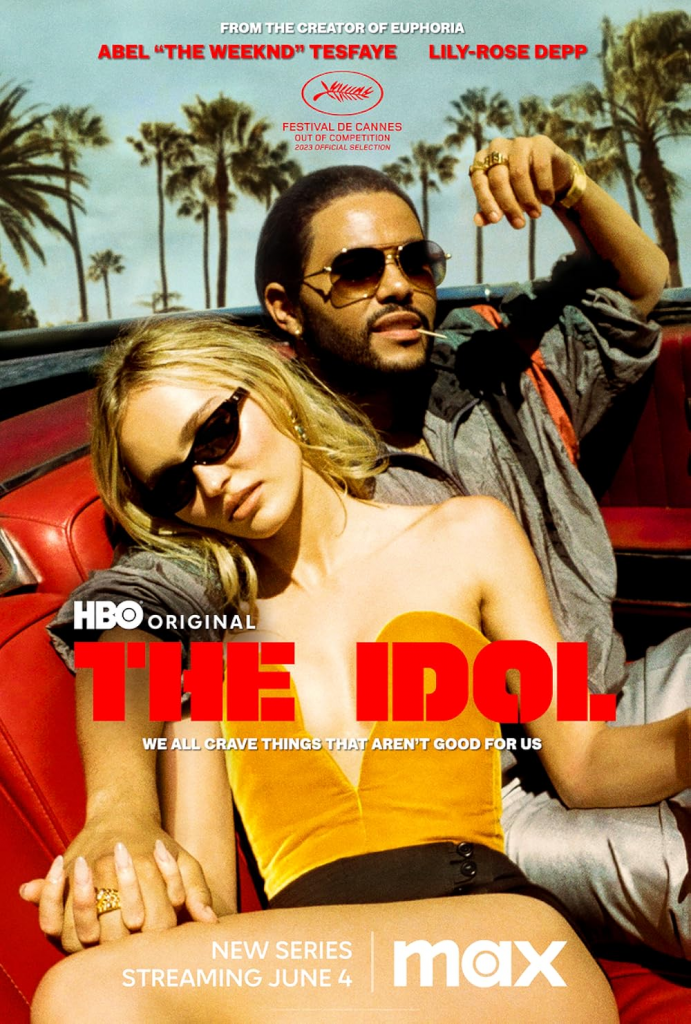
I didn’t really want to include a scene from this show because of how vulgar some language and scenes were, but “The Idol” written by Abel Tesfaye (The Weeknd), Sam Levinson, and Reza Fahim became a flop in 2023 after its release. Viewers complained of the show being too explicit, but also had confusing writing and awkwardness surrounding the acting. The show attempted to combine pop-star fantasy with a dark psychological descent, but its storytelling ultimately ruined everything. The characters were pretty inconsistent throughout and the show lacked a clear narrative arc with scenes often jumping around one another. Many viewers also noted how many of the more provocative scenes were made just to add in more provocative scenes, not to serve the show’s purpose at all. For a project with huge hype among Gen Z, “The Idol” became a prime example of how writing without structure leads to a storytelling failure.
Creating My Own Documentary: Pre-Production
In creating my own documentary, I already had some ideas in mind. I’ve always wanted to create a ‘mockumentary’, similar to the style of the hit show The Office. In doing so, I am attempting to create a mockumentary of my cat, and his daily activities. Since all he does is sleep, I thought adding my own narration and interview would spice up the video. All in all, I am planning to utilize everything I’ve used in this semester to create this documentary, and make it engaging for viewers.
View my planning document here (and please note, details may change!!).
This week, I will be going over everything I learned involving continuity editing, defined by Adobe as using “a variety of classic film editing techniques to blend multiple camera shots — some taken at different times or even different locations — into a seamless, consistent narrative” (What is continuity editing in film?).
In an effort to learn more, I read chapters three and four of Tom Schroeppel’s The Bare Bones Camera Course for Film and Video, learning about both basic sequence and screen directing when shooting.
The Bare Bones Camera Course for Film and Video
Chapter Three: Basic Sequence
This chapter really breaks down the “basic sequence” — that familiar progression from a wide shot to a medium to a close-up. It’s so common you barely notice it, but once Schroeppel lays it out, you realize how much deliberate planning sits behind something that feels so effortless. The wide shot grounds the viewer in the space, the medium pulls you closer into the action, and the close-up zeroes in on the emotional or informational details that matter most. Schroeppel makes it clear that good sequencing isn’t about shooting pretty angles—it’s about building a logical visual flow. That’s why matching action from shot to shot is such a big deal. When movement carries cleanly across cuts, the story feels like it’s unfolding in real time, even if you’re jumping between lenses and camera positions. After reading this chapter, I may never watch some of my favorite films the same!!
Chapter Four: Screen Directing
This chapter digs into screen direction—one of those concepts that seems invisible until someone finally points it out. Schroeppel breaks down how consistent left-to-right or right-to-left movement anchors the viewer’s sense of where characters are in relation to each other, which I thought was really interesting. When someone walks across the frame or turns their head, they need to maintain the same directional flow in the next shot; otherwise, the audience feels an instant, almost subconscious jolt of confusion. That’s where the 180-degree rule comes in. By staying on one side of the imaginary line between subjects, filmmakers preserve eyelines, geography, and the sense that everyone is actually occupying the same space. Even a small, accidental shift can make a character look like they’re suddenly facing the wrong way, which is why this rule is such a staple in both filming and editing.
But the chapter also makes it clear that screen direction isn’t just about avoiding mistakes—it’s a tool that can be bent or broken for effect. Filmmakers can intentionally cross the line to signal a shift in energy or perspective, as long as the audience is guided through the transition with a neutral shot, a motivated camera move, or a cutaway that resets spatial logic. Great examples of this show up in tense scenes where directionality shapes mood: medium shots ground us in the physical layout of a cramped space, while careful cutaways and sound design hint at action just outside the frame. Nothing feels decorative; every shot is chosen to control attention, guide emotion, and maintain clarity. By the end of the chapter, it becomes obvious that screen direction isn’t just a technical rule—it’s a subtle, powerful way to make movement readable and storytelling intentional.
Here are some examples of smoother continuity editing seen throughout projects:
The Hunger Games: Catching Fire – Katniss Training Scene
In general, Catching Fire uses smooth continuity when showing Katniss moving through the Training Center. In this scene, the editors match her movement across angles so each cut feels like a natural continuation of her actions. Wides establish the space, mediums highlight strategy or tension, and close-ups capture emotional beats. It’s a clean example of how continuity keeps large environments understandable. Keeping close to Katniss in this scene, we can feel how intimidating or important this drill must be, while also seeing her perfect accuracy with her bow from farther shots.
Stranger Things: Season Four, Episode Four – Max’s Song Scene
This scene cuts between wide shots of Max in the Upside Down, close-ups of her terrified expressions, and medium shots following her as she runs. Even though the angles shift constantly, the motion stays smooth and aligned with the music. That continuity keeps the tension rising without confusing the viewer, and it shapes a clear emotional narrative — Max fighting for her life, her friends fighting for her, and the desperate countdown created by the beat of the song.
Crazy Rich Asians – Wedding Scene
This beautiful, emotional wedding scene uses both wide and medium shots to establish the scale of the ceremony, then close-ups to highlight character reactions and the moment’s intimacy. Every cut aligns with the movement of the bride or the flow of the water down the aisle. Combined, everything is smooth, romantic, and visually coherent — perfect for showing continuity in a non-action context.
Editing My Own Tutorial
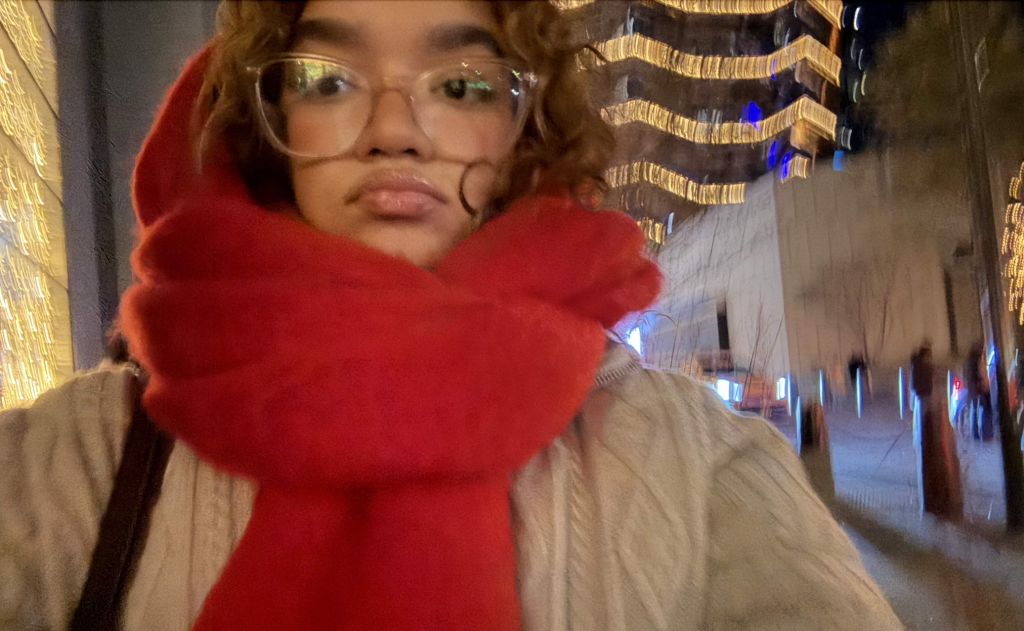
When creating my own tutorial using continuity editing, I wanted to make sure I had an engaging, fun idea. Since I’m into fashion, I thought a styling video would fit well! For this tutorial, after a cold day trip to New York I thought tying a scarf would be fun, since there’s so many ways to do so. Using two different angles, I was able to show my audience how to tie a scarf three different ways, all pretty simple. In the end, I really liked how this tutorial came out, and using multiple angles really helped in assisting my ideas!
To create a video montage, I first wanted to understand both pre and post-production to the best of my ability before starting the project. While my previous blog post covered all kinds of information regarding pre-production, this post will cover post-production: my challenges, the editing process, and my overall thoughts on creating this project.
The Bare Bones Camera Course for Film and Video
Chapter 10: After the Shoot – Editing
In this chapter, Tom Schroeppel discusses how editing should feel: fun! Besides giving readers advice such as pacing the video shots without distractions or making sure every shot is different, Schroeppel makes sure to let his audience know that this is their project. While it is important to keep track of the pacing, matching the music, checking the sounds, etc., it all really depends on how you want to relay your message to your audience. I took this point away from the chapter because of how different it can make a shot. There can be the same exact event in front of you, but no shot will ever be the same! Same with directing, every director can have a different vision for the same exact shot. It all depends on who is shooting it!
I wanted to show some examples of various editing styles:
Euphoria S2E1 – New Year’s Party
Euphoria S2E1 – New Year’s Party (2022)
Of course, when mentioning editing Euphoria should always come up. Sam Levinson, the director of the show, knew exactly how to capture emotion through both camera movements and editing. The slow motion zoom to the main characters with such a busy background show the intensity of their situation, with a fade to black when transitioning to each character. The music matching the transitions perfectly also ties into the intensity of the scene, and the slower pacing shows the characters’ thoughts vividly on their faces. All in all, Euphoria is one of my favorite shows to talk about when mentioning editing, because of how vivid and real the scene becomes with the right scenes, music, etc.
Attack on Titan S3E2 – Levi vs. Kenny Squad
Attack on Titan S3E2 – Levi vs. Kenny Squad
This scene, known to be on of the most iconic scenes in Attack on Titan and is admired for its animation, shows a more personal attack on Levi, the Survey Corps’ Special Operations Squad captain. His childhood mentor, Kenny, was hired to take out the team, including Levi. This betrayal and anger was shown perfectly throughout this scene, through super fast pacing as they swing around and faster transitions when a gun or ODM grappling hook fires. The SFX mixed with the fast-paced animation added to the intensity of the scene, and was able to show Levi’s nerves, something he usually doesn’t show. The added-in flashback of Levi (01:39 second mark) shows the audiences Levi’s thoughts, and adds in even more context to the intense scene. This scene, besides it’s insane animation, gives the audience a new perspective of the captain through the intense editing of this moment.
Tangled (2010) – “I See The Light”
Tangled (2010) – “I See The Light”
Now for a calmer scene, this scene captures a beautiful moment for Rapunzel as she finally sees the lanterns for the first time after such a long journey. There is medium pacing in this scene, around 3-5 seconds per shot, some even slower for emotional beats. The super smooth pacing and transitions heighten the romance between the couple, and the glow of the lanterns and their reflections in the water matches the scene perfectly. There are even dissolves and crossfades to move between Rapunzel and Flynn’s perspectives, then zooms back out to emphasize shared moments between the two. One of my favorite Disney movies, this scene shows a new perspective of both the characters, as they finally realize their feelings.
Editing My Own Montage
Now it’s my turn! In creating a montage, I wanted to capture a moment in my everyday life. With the falling leaves and autumn weather, this is the perfect time to capture my morning walk around my neighborhood. Already finished with my pre-production planning from my previous blog, I had everything I needed to begin production.
Now, it was time for me to get comfortable bringing a tripod around my neighborhood. On a mission to not get any houses or people in my video, I did my best with what I could capture. In the end, to avoid any misunderstandings, I created a montage of my backyard, a place that has captured many of my favorite childhood memories. Using various composition techniques and angles, I tried my best to capture the relaxing feeling of my backyard. With slower pacing and relaxing music, the montage gives a small glimpse into my backyard. Enjoy!
The Bare Bones Camera Course for Film and Video, Tom Schroeppel
Chapter One: Basics
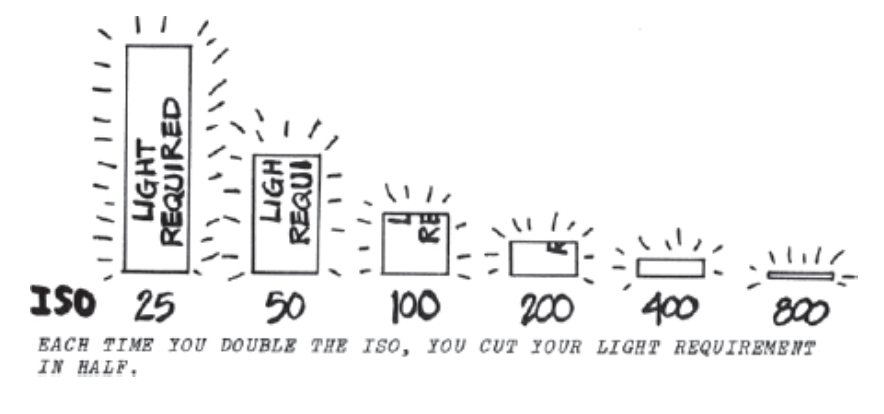
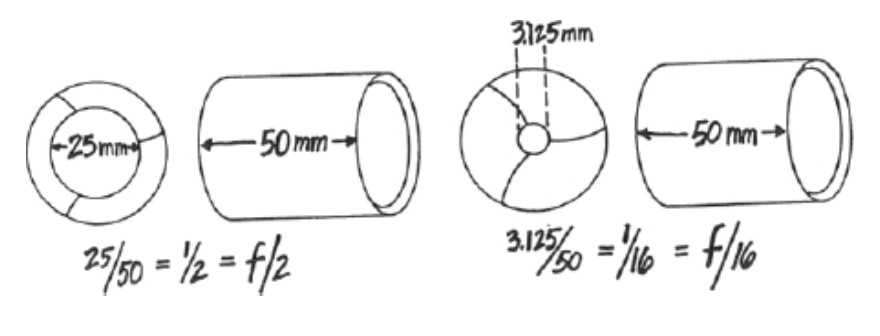
In the opening chapter, Schroeppel lays out the essential building blocks of filmmaking—exposure, lenses, and depth of field. He compares the camera to the human eye, showing how it can move beyond simple observation to become a tool for storytelling. I gained a clearer understanding through images and demonstrations of how aperture, shutter speed, and ISO work together to shape an image’s brightness, sharpness, and overall mood, while depth of field controls what draws the viewer’s attention within the frame.
Images from Tom Schroeppel’s “The Bare Bones Camera Course for Film and Video” Chapter 1; left image explaining ISO and right image explaining aperture.
Chapter Two: Composition
This chapter shifts from the more technical aspects of filming to the artistic decisions that define visual storytelling. Schroeppel explores the importance of composition—using the rule of thirds, balance, and leading lines to guide the viewer’s eye and convey meaning. I learned how choices in framing and camera angles can shape the audience’s perception and emotional response. Every shot becomes a conscious decision, whether in journalism or film, to express a narrative, create a metaphor, or evoke a specific mood—all without relying on dialogue or sound. I wanted to point out Schroeppel’s point of a shaky camera ruining the viewer’s ‘illusion’ of what should be a steady shot using a tripod. It is just so interesting how a camera can give almost any illusion; a shaky camera can give a sense of urgency, while a steady shot can be more calm. An unusual angle can highlight an unusual situation, while a regular angle shows the viewers exactly what is going on.
Chapter Five: Camera Movements
In this chapter, Schroeppel explains that camera movement builds on composition by adding rhythm and energy to the visual story, which I feel is similar to composition. Schroeppel explains that movements such as zooms, pans, tilts, and tracking shots aren’t just stylistic choices; they serve clear narrative purposes for a story. A simple MOTION can reveal important key details. I found it interesting, similarly to composition, how even subtle camera shifts can dramatically influence a scene—whether in a film, documentary, or any other production project. The way the camera moves ultimately determines how the viewer experiences the story.
Chapter Six: Montages
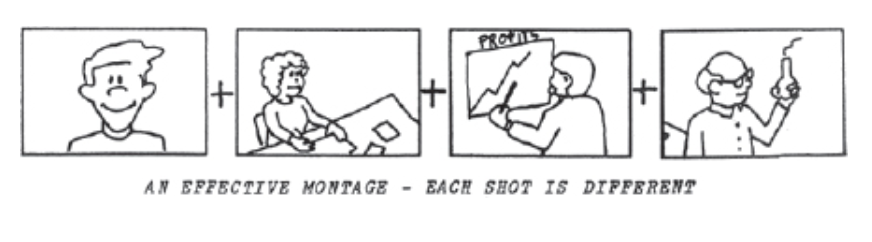
Montages, usually used in TV commercials or documentaries, condense time and distance for viewers. A series of shots, depending on the content, can set a mood or summarize information, making montages an easier way to relay a message. Schroeppel made sure to note, however, that it is crucial to make each shot of a montage different. If not, it can look like a “bad cut between two similar shots of the same thing”. Schroeppel. recommends shooting a variety of different angles and image sizes to create a successful montage, and switch things up.
Image from Tom Schroeppel’s “The Bare Bones Camera Course for Film and Video” Chapter 6, Montages.
In this article by Jacob Trussel, we are given 15 things to do during video production. Different tasks include defining your goals, writing your script, creating storyboards, and much more. We are given step-by-step instructions in video production, and this checklist doesn’t miss a step. Things like selecting the type of video or creating a schedule aren’t things I would’ve thought of before, but now will as I get into production.
This article, written by Amanda Athuraliya, explains the concept of storyboards, and how beneficial they are to successful projects. Storyboards involve sketching out the scenes you plan on creating, kind of like a comic strip. This idea can help list out any ‘inconsistencies’ in your idea, and can help in avoiding shooting any unnecessary scenes. The four steps to creating a storyboard include planning your video, visualizing your script, adding a script and additional notes, and collaborating or revising with others. These steps help greatly in finalizing a story before actually shooting, and can help so much in production.
Miles Morales Jumps / A leap of Faith – 4K HDR – Spider-Man (2018), starts at 0:36
To show some examples of successful uses of visual composition techniques, I felt that this movie was a perfect example. Known as a movie that breaks the rules of animation, Spider-Man: Into the Spider-Verse also uses many unique techniques that make the movie special. In this scene, Miles is swinging around New York after taking a leap of faith. The camera leaves open space ahead of where Miles is swinging, giving him “lead room.” This creates a sense of motion and anticipation for viewers, and gives the illusion that the city is endless. Leading lines and rule of thirds are also used, as the city’s lines and angles draw the eye toward Miles while he is swinging and some angles show Miles on the third lines. All in all, this movie, one of my favorites, provides many different techniques to give viewers a unique look into Miles’ thoughts and show different perspectives throughout both movies.
Of course I had to use my favorite movie 🙂 This scene alone, from the beginning gives viewers context of the character’s location using rule of thirds. The scene starts with the peach tree and Oogway on the right third line, and uses the rule of thirds to help viewers see both characters in the frame. As for the location, the rule of thirds allows viewers to see how isolated and high this peach tree is, with the stars behind them. All in all, this rule, widely used by directors, can give viewers much more to look at than the center of the screen, and give newer perspectives on scenes depending on what you’re shooting.
Dune: Part Two – Riding the Sandworm- (HDR – 4K – 5.1), starts at 0:20
Both Dune and Dune: Part Two provide unique camera techniques for such a unique concept. This scene in particular from Dune: Part Two gives viewers a great perspective on depth. We are shown just how big the desert around them is, and also a perspective on the sandworm’s size. In such a big desert and a pretty far away angle, the sandworm is still pretty large on the screen, which is bigger than they expected. This also shows viewers how Paul overcame such a big obstacle, riding a sandworm and fulfilling his prophecy. Viewers in the comments of this video also talk about the intensity of this scene, feeling like they were riding the sandworm with him. This shows how depth gave viewers perspective on such an intense obstacle, and pulled them in even more.
To get used to the camera and some newly-learned techniques, I will be creating a project of my own. I will be creating a montage, with many clips of one location compiled into a one-minute video. For this project I wanted to create a montage of my morning neighborhood walk, as my neighborhood can be quite beautiful around this time of year. With the leaves falling, birds chirping, and decorated houses, I’m sure I can make a cozy autumn video. I personally love content like this, so I decided to make one of my own. Using my iPhone and tripod, I will film my next morning walk and compile the videos into one montage. Using new angles and composition rules can make the video much more engaging and give viewers new perspectives.
Every time I get into a new project, there is always something new to learn about the production process. Not every project is the same, and some may have to be done differently than others – which is okay!! I’ve done some research on recording and editing audio for my upcoming podcast, Let’s Have a Sleepover!
This blog post focused on how to get the right sound on a tighter budget. One of his tips that resonated with me was being careful when vocal editing. While this may apply more towards music, I think it is also important to remember for podcast editing as well. During post-production, to keep things more natural-sounding for the audience, it is important to keep editing to almost a minimum, besides the added music or sound effects. Depending on different tools to alter or change your voice can easily ruin a podcast if overused.
Another point that I wanted to highlight was the importance of taking several takes to get the right sound. Again, while this mostly applies to music, this is just as valid for podcasting. To get the more natural sound of your voice, several takes must be made to get you more comfortable for the mic.
In this article, Videomaker stresses the importance of audio in video productions. They even encourage readers to think of editing audio first for their next project, as it can “transform” their sound and elevate their projects. From recording extra B-roll footage to post-processing your audio, Videomaker offers many tips to elevate your audio in post-production. I believe the author’s main point to readers is the importance of audio in any production, as it sets the bar for the project’s quality. Bad audio means bad quality, and good audio means… well you get it.
I have a couple of examples of projects that I’ve enjoyed recently with exceptional audio and sound effects:
Via Li, a YouTuber that I watch frequently, has a channel exclusively for journal entries – to share things she has learned, share advice, and update supporters on her life. I enjoy this channel because of how relaxed it is, and how personal the video feels. The audio quality, though she is holding the microphone in her hand (which I’ve heard is a big no-no in audio), is great, and the added in sound effects add a lot of mood to her video. Sound effects, to me, portray a new side of hosts that you may not see in the rough cut of the podcast, when they’re just sitting in front of the microphone. I definitely want to edit my podcast a bit similar to hers, as I like her editing style for both audio and video.
First off, apologies for such a sad scene 😭 Being such a quiet movie with almost no dialogue, this scene does a perfect job at keeping the audience on their toes. I also liked how the audio went super muffled when focusing on the girl, as it shows she is deaf. Hearing the quiet footsteps and then the sound of the toy rocket shows the audience how such a small noise can be much louder in their difficult situation, and keeps the audience engaged yet sympathetic for such a sad situation.
This scene involves the music syncing up perfectly to Baby’s life. Walking listening to Harlem Shuffle by Bob & Earl, the city’s noises sync with the song in his headphones. I love how playful this scene is, and how the music itself is pretty funky. Syncing them allows viewers to think they’re inside the character’s head, which is a pretty unique way to do so!
Through these examples and research of getting the perfect audio, I wanted to try creating a podcast episode for myself.
As a semi-beginner editor of both video and audio, I want to make sure I know everything I need to know to create my own content. In this module, lots of research was done on sound itself, and I was able to better understand how podcasts are first created!
For my first reading, I read chapter eight of The Bare Bones Camera Course for Film and Video by Tom Schroeppel and Chuck Delaney. The book offers great beginner-friendly information about film and video editing, as well as small recommendations for smoother production experiences.
Going into this reading, I didn’t know much about sound editing, and wanted to get a clear idea of sound itself. The author, Tom Schroeppel, explains the concept of sounds, and also emphasizes the importance of clear audio, and tells us that even the most beautiful video footage can easily be ruined by poor sound.
Schroeppel really drives home how important sound can be in filmmaking. As a reader, I also learned the basics of recording sound that’s not just clear, but intentional—something that can actually add to the story rather than distracting from it. Choosing the right microphone, the location, and cancelling out background noise are all important factors in achieving clear audio quality for projects, and can make or break a video. Schroeppel even points out the difficulty of audio editing, saying that paying attention to the audio during filming can make things much easier during post-production.
Reading this made me realize how often sound can be overlooked in production, even though it’s what gives any video its mood, emotion, and sense of relatability. Good audio doesn’t just support the visuals—it completes them.
The next reading I wanted to discuss was an article by Kevin Anderson, “The Art of Creating an Invisible Podcast Episode Script”. Explained by Anderson, an invisible podcast script can come across very natural, enough that the listener doesn’t think it’s scripted. To do this, however, you still need structure! Creating an invisible script, includes key elements like the welcome message or sponsor introduction, should be linear and follow one after the other. This can help in staying organized and confident in what you’re saying, and can provide that important structure to the episode. Mentioning important elements such as attention-capturing openings and conversation-like scripts can help the script sound more natural, and not like a script is being read.
I liked Anderson’s message on mixing both planning and spontaneity to create a natural-sounding podcast. Things like intros, sponsor messages, or key transitions can be scripted, while the rest can be outlined with bullet points. This approach keeps the episode flowing smoothly and makes sure you cover all your main points. The article also highlights a few benefits of having a script: it keeps you on track, saves time during editing, and helps you sound more polished as a host. Most importantly, it lets you focus on connecting with your audience—since you’re not worrying about what to say next. Overall, the invisible script is all about preparation that sounds effortless once you hit record.
This reading, “Creating a Great Podcast Script: 3 Methods Top Podcasters Use” by Colin Gray, gets into various methods of podcast script writing, all tried and true by successful podcasts. The first method, writing the episode word-for-word, is mainly used by beginning podcasters and ensures that no detail is missed. This helps build confidence for these hosts, and can often change into less and less being written down as they go! Although this takes longer to prepare and may sound monotone when reading aloud, I personally believe this method works for more informational podcasts, where hosts rely on statistics and information to relay to viewers.
The next method, writing a detailed outline, is definitely a method I would use. I have also used this method in presentations, only writing an outline of the top points I want to cover. Gray recommends 5 to 10 bullet points of general topics to cover, then 4 to 7 bullets of information within those general topics. Anything past this may be too much to cover, and may need to be slimmed down to fit into the episode. This method can help in sounding more conversational yet still keep the host on topic, and provides a good middle-ground for both details and flexibility in the script. The last method, a rough bullet point podcast plan, is most likely for more experienced podcasts. This method is much quicker to plan, and involves lots of making things up as you go. These bullet points can be beneficial for more conversational podcasts, since valuable information can be lost or forgotten within a couple of bullet points.
This reading dives into the importance of taglines, hooks, and slogans in podcasts, and how they engage listeners. A tagline, part of your personal brand, should be the first thing a listener remembers about your podcast. Creating your own should be fun and attract viewers, as well as summarize or go with the theme of your podcast. One of my favorite podcasts, Upstairs Neighbors with Dom and Maya, has their own tagline: “Take a seat, get comfortable, and welcome to the neighborhood”. This tagline feels very “homey” and comfortable to me, and matches their concept incredibly well!
Hooks can be pretty similar. To make things interesting, hooks can be used to introduce segments, call-to-action (subscribe!), or introducing your sponsors (if they don’t write one for you already). I liked Anderson’s comparison of thinking of hooks as chapter headings in a book, helping listeners navigate your show. By thoughtfully crafting your podcast’s tagline and hooks, you can make a lasting impression on new listeners and encourage them to tune in regularly.
This reading covers many different tools to help elevate your podcast and make things a lot easier for production. I like how the author points out the simplicity of podcasting. You don’t need the best technology or editing software, just the message and audience! The article also points out various stages of podcast planning, and specific tools to help make the process smoother. With tools ranging from Alitu for AI-assisted planning and editing to Beehiiv as an email marketing platform, the true lesson I learned from this article is the importance of your message and who you want to reach, not the equipment you use!
This final article emphasizes the importance of comfortability and practice when refining your presentation skills to create an engaging and professional-sounding podcast. Whether you’re new to podcasting or looking to improve your skills, Cudmore provides tips and tricks to get comfortable in front of the mic. From talking in front of a teddy bear to repeating segments over and over again to avoiding cold water, these tips can help hosts in perfecting their scripts, and get comfortable with their listeners.
Another important point made by Cudmore is the importance of guest interviews, and knowing how to do them. It is crucial to listen and react to your guest, and develop more questions from what they’re saying. Guest interviews can definitely spice up a podcast and attract new listeners no matter who the guest is, so it’s important to make it count!
My Favorites!
While I don’t listen to many podcasts, I do have some that I tune into every now and then.
“Bring Back the Bald With Vanillamace!”, Upstairs Neighbors Podcast
One of my current favorite podcasts is Upstairs Neighbors, as mentioned earlier. While I’ve been following for a while, Dom and Maya (blue and green sweaters) recently announced a partnership with TMG Studios, a podcast network owned by fellow podcaster Noel Miller. Since then, their podcast quality and production has gone up, and more people have started listening. This episode, featuring trending streamer Vanillamace, attracted many new supporters and made the episode pretty popular for their channel. Their addition of the creepily-real-looking chipmunk noses also adds to the video, as many comments talk about this and other recent costumes the duo has added to spice up their videos.
“Huda: Love Island Tell All”, Call Her Daddy Podcast
While I don’t avidly watch this podcast, I have watched a few episodes of the guests I am most interested in. This podcast, one of the most watched and listened-to podcasts currently, is known for its popular guests and conversation format between the guest and Alex Cooper, the host. This podcast is incredibly high quality, and engages many different fan bases through their guests.
“Nightclub Turns Into GAS CHAMBER Killing 242 University Students In One Night”, Rotten Mango Podcast
This podcast is one of my favorite when it comes to storytelling. Stephanie Soo, the host, tells true stories as if they were happening right then. She and her team put lots of research into their episodes, and cover all kinds of true horror stories with dramatic but engaging storytelling. This was the first episode I’ve ever watched of hers, and the hook immediately pulled me into the story. Definitely recommend watching!!
Let’s Make a Podcast!
As a girl who has lots to talk about, I created a podcast to get my thoughts out and have conversation. One of my biggest feelings lately is FOMO: fear of missing out. As a full-time employee and graduate student, there isn’t much time for myself. I wanted to get my feelings out through this podcast, and hopefully connect with people in similar situations. I also definitely want to fit some pop culture topics into the episode, which can relate to my topic of FOMO.
Below is a planning document I created to outline my thoughts for my first episode!
All in all, creating podcasts is something just about anyone can do. No need for the fancy equipment or software, just a message and an audience. I’m excited to start this project, and hope you learned something from my takeaways!