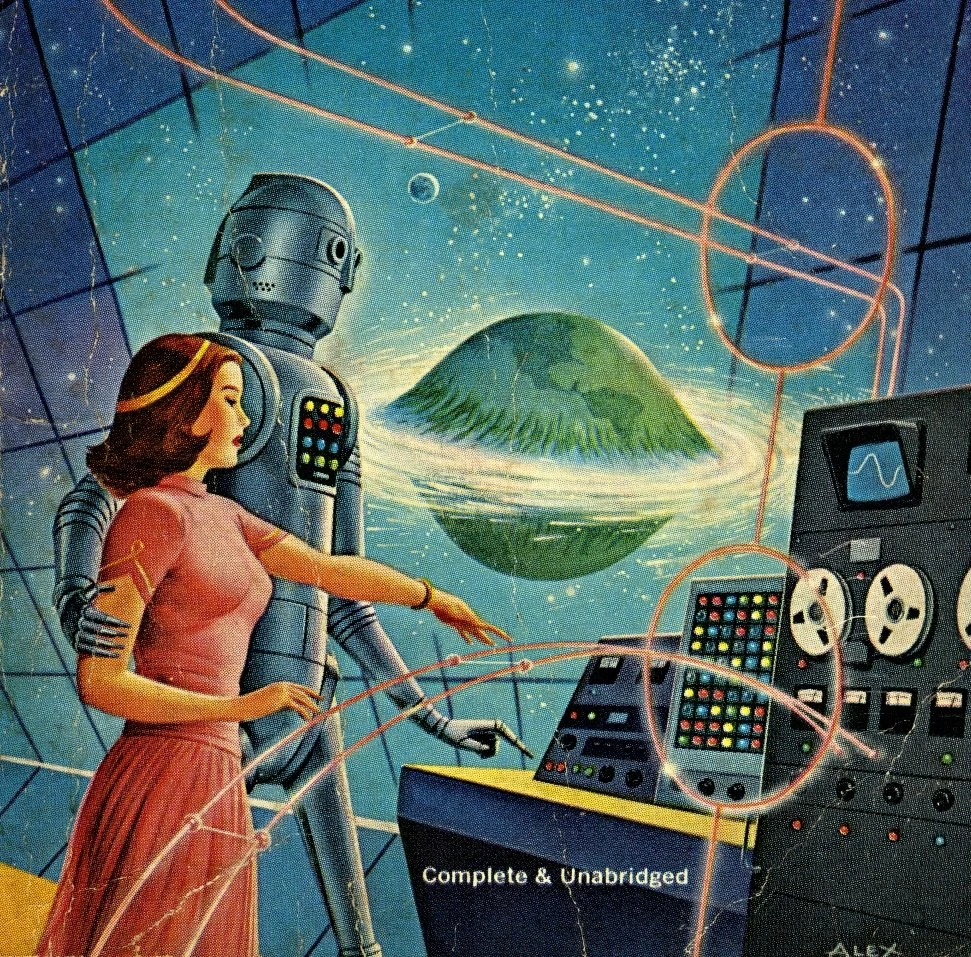
Designers are constantly asked to imagine the future — sleeker products, smarter systems, faster solutions. But imagination alone isn’t enough; it needs form, context, and meaning. That’s where design fiction comes in. Design fiction blends storytelling with design practice, using narrative and visual artifacts to make speculative futures feel real enough to explore. Instead of asking “What will the future look like?”, it asks, “What if this future existed — and how would it feel to live there?”
In an exercise I participated in called ‘The Thing From the Future‘, I was randomly given four words under the themes arc, terrain, object, and mood. With the four words generated, I was assigned to create a product or solution and describe it even further. When I first played the game, I thought it would just be a fun brainstorming activity — random prompts and creating odd gadgets from imaginary futures. But the moment I drew the most random card combinations, a new creative side of me unlocked. From the EchoBracelet, a wearable device that lets people replay sounds from their favorite memories, to the MemoryMirror, a mirror that allows elderly people to look into some of their most cherished memories, I created such random ideas from the most random words. After so much thinking, I began to realize that I wasn’t just designing an object — I was designing a story.
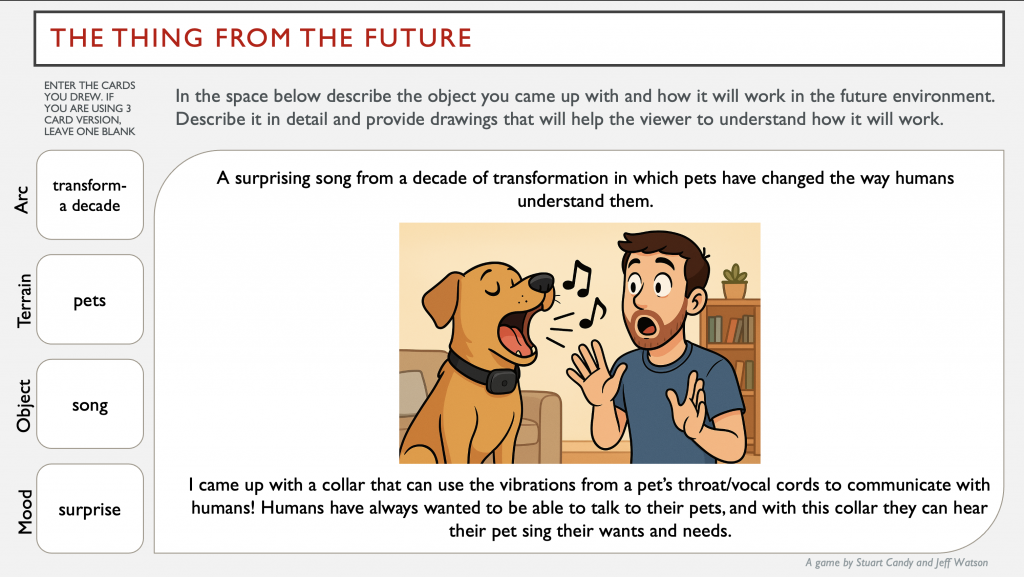
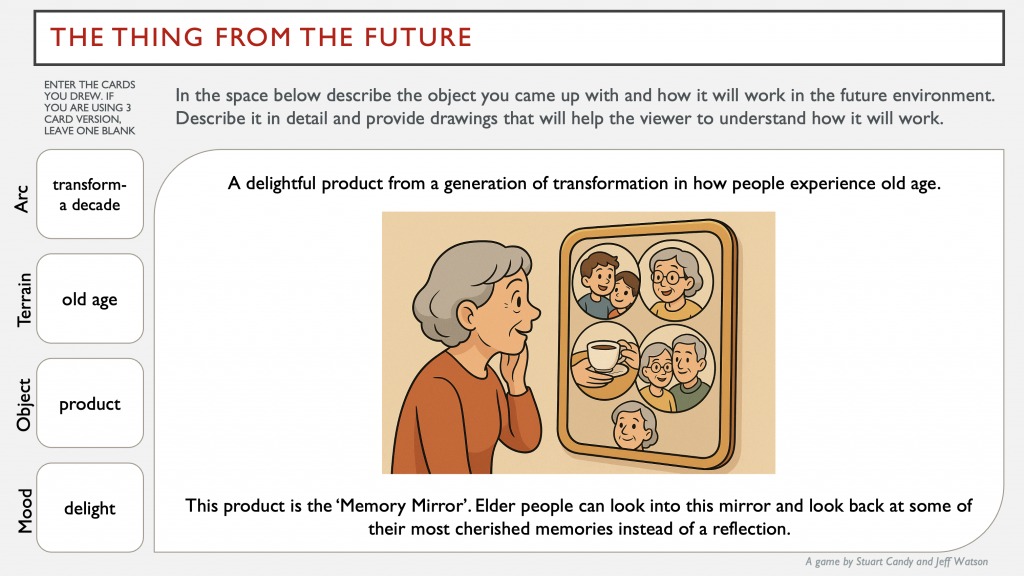
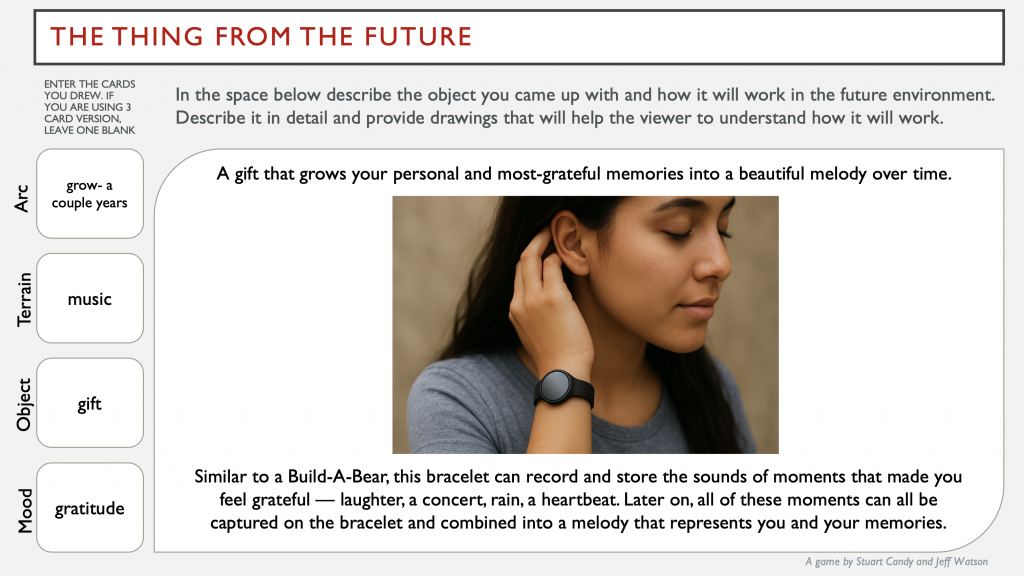
This was my starting point — my call to adventure when researching. The activity wasn’t only imagining technology; it was visualizing emotion. The EchoBracelet had to communicate intimacy, nostalgia, and connection through the design alone. That’s when I turned to the concept of design fiction, a method that uses storytelling and visual artifacts to explore possible futures. I enjoyed Richard Buday’s definition:
“Using fiction to test the use and acceptance of unusual designs”, Richard Buday 2020.
What Is Design Fiction and Where Does It Come From?!
To summarize, design fiction is a practice that creates story-worlds and populates them with diegetic prototypes — artifacts that exist inside these fictional worlds and make that world believable. Popular science fiction author Bruce Sterling introduced the term design fiction in the mid-2000s then expanded on it, calling it “the deliberate use of diegetic prototypes to suspend disbelief about change.”
How This Relates to Visual Design
Storytelling is at the core of effective design fiction, and it directly connects to how we approach visual design. The Medium article “How to Use the Hero’s Journey as a Design Thinking Tool” explains how narrative frameworks can guide design processes. The “Hero’s Journey” — where a protagonist leaves a familiar world, faces challenges, and returns transformed — mirrors how users experience a product. Good design visualizes this transformation, helping audiences see change, conflict, and resolution through composition, motion, and tone.
Conclusion
Ultimately, design fiction helps designers move from problem-solving to possibility-making. It uses narrative storytelling and visuals to ask deeper questions about responsibility, culture, and values. In a time when design often feels driven by algorithms or consumer trends, design fiction reminds us that the future is not something that happens to us — it’s something we can co-create, critique, and visualize together.
Leave a Reply